Abbas Kiarostami
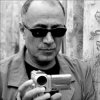
Abbas Kiarostami
Abbas Kiarostami; 22 June 1940 – 4 July 2016) was an Iranian film director, screenwriter, photographer and film producer. An active film-maker from 1970, Kiarostami had been involved in over forty films, including shorts and documentaries. Kiarostami attained critical acclaim for directing the Koker trilogy, Close-Up, Taste of Cherry– which was awarded the Palme d'Or at the Cannes Film Festival that year – and The Wind Will Carry Us. In his later works, Certified Copyand Like Someone in Love, he...
NationalityIranian
ProfessionDirector
Date of Birth22 June 1940
Usually when I write a script, I have in mind some real people that I'm writing about, who don't always act in the film afterward.
In order to be able to cooperate with a child, you have to come down to below their level in order to communicate with them. Actors are also like children.
The film [Close Up] made itself, to a large extent. The characters involved were very real, I wasn't directing the actors so much as being directed by them. So it was a very particular film.
Therefore, when you see the end result, it's difficult to see who's the director, me or them. Ultimately, everything belongs to the actors - we just manage the situation.
Using non-actors has its own rules and really requires that you allow them to do their own thing.
It's very true that non-actors feel more comfortable in front of a digital camera, without the lights and the large crowd around them, and we arrive at much more intimate moments with them.
I thought that choosing a non-professional was a condition for me, because it would allow Juliette to have a less-professional way of acting. It would challenge her performance as a professional actress.
I do think that we are sometimes, as directors, guilty of portraying or asking our actors to behave in certain ways that are perhaps not very morally acceptable. I'm not the only one.
Usually when I take my films to festivals, I feel incredibly anxious about them. I wonder how it will be received, how the audience will react. I feel deeply responsible for them.
I think life is so difficult to catch, it's so furtive, that a copy, a film, can in no way catch it and represent it.
I was mentioning with the digital camera, maybe this new fashion of filmmaking gives a closer look of what life may be like. But it's still nothing but a copy.
I don't like reverse-angle shots - I find them very fake and very untruthful to the viewer.
This [the earthquake] was a very big influence on me, and the issue of life and death from then on does recur in my films.
My films have been progressing towards a certain kind of minimalism, even though it was never intended. Elements which can be eliminated have been eliminated.