Aristotle
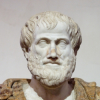
Aristotle
Aristotle was a Greek philosopher and scientist born in the city of Stagira, Chalkidice, on the northern periphery of Classical Greece. His father, Nicomachus, died when Aristotle was a child, whereafter Proxenus of Atarneus became his guardian. At eighteen, he joined Plato's Academy in Athens and remained there until the age of thirty-seven. His writings cover many subjects – including physics, biology, zoology, metaphysics, logic, ethics, aesthetics, poetry, theater, music, rhetoric, linguistics, politics and government – and constitute the first comprehensive system...
NationalityGreek
ProfessionPhilosopher
Business or toil is merely utilitarian. It is necessary but does not enrich or ennoble a human life.
Happiness is the utilization of one's talents along lines of excellence.
Shame is an ornament to the young; a disgrace to the old.
Nature, as we say, does nothing without some purpose; and for thepurpose of making mana political animal she has endowed him alone among the animals with the power of reasoned speech.
A fool contributes nothing worth hearing and takes offense at everything.
No one finds fault with defects which are the result of nature.
God has many names, though He is only one Being.
The greatest thing in style is to have a command of metaphor.
Wit is cultured insolence.
And it is characteristic of man that he alone has any sense of good and evil, of just and unjust, and the like, and the association of living beings who have this sense makes family and a state.
To give a satisfactory decision as to the truth it is necessary to be rather an arbitrator than a party to the dispute.
In practical matters the end is not mere speculative knowledge of what is to be done, but rather the doing of it. It is not enough to know about Virtue, then, but we must endeavor to possess it, and to use it, or to take any other steps that may make.
For the lesser evil is reckoned a good in comparison with the greater evil, since the lesser evil is rather to be chosen than the greater. .
Civil confusions often spring from trifles but decide great issues.