Aristotle
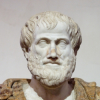
Aristotle
Aristotle was a Greek philosopher and scientist born in the city of Stagira, Chalkidice, on the northern periphery of Classical Greece. His father, Nicomachus, died when Aristotle was a child, whereafter Proxenus of Atarneus became his guardian. At eighteen, he joined Plato's Academy in Athens and remained there until the age of thirty-seven. His writings cover many subjects – including physics, biology, zoology, metaphysics, logic, ethics, aesthetics, poetry, theater, music, rhetoric, linguistics, politics and government – and constitute the first comprehensive system...
NationalityGreek
ProfessionPhilosopher
Since we think we understand when we know the explanation, and there are four types of explanation (one, what it is to be a thing; one, that if certain things hold it is necessary that this does; another, what initiated the change; and fourth, the aim), all these are proved through the middle term.
The same thing may have all the kinds of causes, e.g. the moving cause of a house is the art or the builder, the final cause is the function it fulfils, the matter is earth and stones, and the form is the definitory formula.
In all things which have a plurality of parts, and which are not a total aggregate but a whole of some sort distinct from the parts, there is some cause.
The saying of Protagoras is like the views we have mentioned; he said that man is the measure of all things, meaning simply that that which seems to each man assuredly is. If this is so, it follows that the same thing both is and is not, and is bad and good, and that the contents of all other opposite statements are true, because often a particular thing appears beautiful to some and ugly to others, and that which appears to each man is the measure
True happiness flows from the possession of wisdom and virtue and not from the possession of external goods.
Happiness is at once the best, the noblest, and the pleasantest of things.
Every virtue is a mean between two extremes, each of which is a vice.
Nowadays, for the sake of the advantage which is to be gained from the public revenues and from office, men want to be always in office.
It is not easy for a person to do any great harm when his tenure of office is short, whereas long possession begets tyranny.
It is not the possessions but the desires of mankind which require to be equalized.
Great is the good fortune of a state in which the citizens have a moderate and sufficient property.
There is nothing grand or noble in having the use of a slave, in so far as he is a slave; or in issuing commands about necessary things. But it is an error to suppose that every sort of rule is despotic like that of a master over slaves, for there is as great a difference between the rule over freemen and the rule over slaves as there is between slavery by nature and freedom by nature . .
Concerning the generation of animals akin to them, as hornets and wasps, the facts in all cases are similar to a certain extent, but are devoid of the extraordinary features which characterize bees; this we should expect, for they have nothing divine about them as the bees have.
We must speak first about the division of land and about those who cultivate it: who should they be and what kind of person? We do not agree with those who have said that property should be communally owned, but we do believe that there should be a friendly arrangement for its common use, and that none of the citizens should be without means of support.