Aristotle
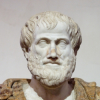
Aristotle
Aristotle was a Greek philosopher and scientist born in the city of Stagira, Chalkidice, on the northern periphery of Classical Greece. His father, Nicomachus, died when Aristotle was a child, whereafter Proxenus of Atarneus became his guardian. At eighteen, he joined Plato's Academy in Athens and remained there until the age of thirty-seven. His writings cover many subjects – including physics, biology, zoology, metaphysics, logic, ethics, aesthetics, poetry, theater, music, rhetoric, linguistics, politics and government – and constitute the first comprehensive system...
NationalityGreek
ProfessionPhilosopher
The virtue of justice consists in moderation, as regulated by wisdom.
Courage is a mean with regard to fear and confidence.
Friendship is essentially a partnership.
Therefore, the good of man must be the end of the science of politics.
No one would choose a friendless existence on condition of having all the other things in the world.
If one way be better than another, that you may be sure is nature's way.
A constitution is the arrangement of magistracies in a state.
The greatest virtues are those which are most useful to other persons.
For one swallow does not make a summer, nor does one day; and so too one day, or a short time, does not make a man blessed and happy.
Misfortune shows those who are not really friends.
A tragedy is a representation of an action that is whole and complete and of a certain magnitude. A whole is what has a beginning and middle and end.
It is best to rise from life as from a banquet, neither thirsty nor drunken.
Well begun is half done.
Bad men are full of repentance.