Aristotle
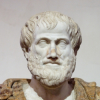
Aristotle
Aristotle was a Greek philosopher and scientist born in the city of Stagira, Chalkidice, on the northern periphery of Classical Greece. His father, Nicomachus, died when Aristotle was a child, whereafter Proxenus of Atarneus became his guardian. At eighteen, he joined Plato's Academy in Athens and remained there until the age of thirty-seven. His writings cover many subjects – including physics, biology, zoology, metaphysics, logic, ethics, aesthetics, poetry, theater, music, rhetoric, linguistics, politics and government – and constitute the first comprehensive system...
NationalityGreek
ProfessionPhilosopher
Of all the varieties of virtues, liberalism is the most beloved.
Dignity does not consist in possessing honors, but in deserving them.
In a democracy the poor will have more power than the rich, because there are more of them, and the will of the majority is supreme.
Patience s bitter, but it's fruit is sweet.
The two qualities which chiefly inspire regard and affection are that a thing is your own and that it is your only one.
Salt water when it turns into vapour becomes sweet, and the vapour does not form salt water when it condenses again. This I know by experiment. The same thing is true in every case of the kind: wine and all fluids that evaporate and condense back into a liquid state become water. They all are water modified by a certain admixture, the nature of which determines their flavour.
If 'bounded by a surface' is the definition of body there cannot be an infinite body either intelligible or sensible.
Hope is the dream of a waking man.
The mass of mankind are evidently slavish in their tastes, preferring a life suitable to beasts.
Those who have been eminent in philosophy, politics, poetry, and the arts have all had tendencies toward melancholia.
The majority of mankind would seem to be beguiled into error by pleasure, which, not being really a good, yet seems to be so. So that they indiscriminately choose as good whatsoever gives them pleasure, while they avoid all pain alike as evil.
It belongs to small-mindedness to be unable to bear either honor or dishonor, either good fortune or bad, but to be filled with conceit when honored and puffed up by trifling good fortune, and to be unable to bear even the smallest dishonor and to deem any chance failure a great misfortune, and to be distressed and annonyed at everything. Moreover the small-minded man is the sort of person to call all slights an insult and dishonor, even those that are due to ignorance or forgetfulness. Small-mindedness is accompanied by pettiness, querulousness, pessimism and self-abasement.
Money originated with royalty and slavery, it has nothing to do with democracy or the struggle of the empoverished enslaved majority.
He who is unable to live in society, or who has no need because he is sufficient for himself, must be either a beast or a god.