Aristotle
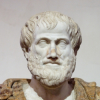
Aristotle
Aristotle was a Greek philosopher and scientist born in the city of Stagira, Chalkidice, on the northern periphery of Classical Greece. His father, Nicomachus, died when Aristotle was a child, whereafter Proxenus of Atarneus became his guardian. At eighteen, he joined Plato's Academy in Athens and remained there until the age of thirty-seven. His writings cover many subjects – including physics, biology, zoology, metaphysics, logic, ethics, aesthetics, poetry, theater, music, rhetoric, linguistics, politics and government – and constitute the first comprehensive system...
NationalityGreek
ProfessionPhilosopher
Where some people are very wealthy and others have nothing, the result will be either extreme democracy or absolute oligarchy, or despotism will come from either of those excesses.
Law is order, and good law is good order.
Character may almost be called the most effective means of persuasion.
Change in all things is sweet.
The law is reason, free from passion.
Good habits formed at youth make all the difference.
Whosoever is delighted in solitude is either a wild beast or a god.
No excellent soul is exempt from a mixture of madness.
The aim of art is to represent not the outward appearance of things, but their inward significance.
Happiness depends upon ourselves.
Hope is a waking dream.
Love is composed of a single soul inhabiting two bodies.
It is not enough to win a war; it is more important to organize the peace.
Men create gods after their own image, not only with regard to their form but with regard to their mode of life.