Aristotle
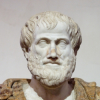
Aristotle
Aristotle was a Greek philosopher and scientist born in the city of Stagira, Chalkidice, on the northern periphery of Classical Greece. His father, Nicomachus, died when Aristotle was a child, whereafter Proxenus of Atarneus became his guardian. At eighteen, he joined Plato's Academy in Athens and remained there until the age of thirty-seven. His writings cover many subjects – including physics, biology, zoology, metaphysics, logic, ethics, aesthetics, poetry, theater, music, rhetoric, linguistics, politics and government – and constitute the first comprehensive system...
NationalityGreek
ProfessionPhilosopher
The chief forms of beauty are order and symmetry and definiteness, which the mathematical sciences demonstrate in a special degree.
Wicked men obey for fear, but the good for love.
Man perfected by society is the best of all animals; he is the most terrible of all when he lives without law, and without justice.
It is a part of probability that many improbable things will happen.
Money is a guarantee that we can have what we want in the future
Good moral character is not something that we can achieve on our own. We need a culture that supports the conditions under which self-love and friendship flourish.
Happiness is an activity of the soul in accordance with virtue
Youth loves honor and victory more than money.
All human happiness and misery take the form of action.
There is honor in being a dog.
We can do noble acts without ruling the earth and sea.
A change in the shape of the body creates a change in the state of the soul.
. . . Political society exists for the sake of noble actions, and not of mere companionship.
Art completes what nature cannot bring to finish. The artist gives us knowledge of nature's unrealized ends.