Aristotle
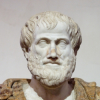
Aristotle
Aristotle was a Greek philosopher and scientist born in the city of Stagira, Chalkidice, on the northern periphery of Classical Greece. His father, Nicomachus, died when Aristotle was a child, whereafter Proxenus of Atarneus became his guardian. At eighteen, he joined Plato's Academy in Athens and remained there until the age of thirty-seven. His writings cover many subjects – including physics, biology, zoology, metaphysics, logic, ethics, aesthetics, poetry, theater, music, rhetoric, linguistics, politics and government – and constitute the first comprehensive system...
NationalityGreek
ProfessionPhilosopher
All men seek one goal: success or happiness.
The quality of life is determined by its activities.
A likely impossibility is always preferable to an unconvincing possibility.
The beautiful is that which is desirable in itself.
All art is concerned with coming into being; for it is concerned neither with things that are, or come into being by necessity, nor with things that do so in accordance with nature.
The seat of the soul and the control of voluntary movement - in fact, of nervous functions in general, - are to be sought in the heart. The brain is an organ of minor importance.
The hardest victory is the victory over self.
To be conscious that we are perceiving or thinking is to be conscious of our own existence.
In the arena of human life the honors and rewards fall to those who show their good qualities in action.
Between friends there is no need of justice.
Man's best friend is one who wishes well to the object of his wish for his sake, even if no one is to know of it.
The basis of a democratic state is liberty
Character is that which reveals moral purpose, exposing the class of things a man chooses and avoids.
Art not only imitates nature, but also completes its deficiencies.