Aristotle
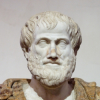
Aristotle
Aristotle was a Greek philosopher and scientist born in the city of Stagira, Chalkidice, on the northern periphery of Classical Greece. His father, Nicomachus, died when Aristotle was a child, whereafter Proxenus of Atarneus became his guardian. At eighteen, he joined Plato's Academy in Athens and remained there until the age of thirty-seven. His writings cover many subjects – including physics, biology, zoology, metaphysics, logic, ethics, aesthetics, poetry, theater, music, rhetoric, linguistics, politics and government – and constitute the first comprehensive system...
NationalityGreek
ProfessionPhilosopher
At the intersection where your gifts, talents, and abilities meet a human need; therein you will discover your purpose
We do not act rightly because we have virtue or excellence. But they hesitate, waiting for the other fellow to make the first move-and he, in turn, waits for you.
It is possible to fail in many ways . . . while to succeed is possible only in one way (for which reason also one is easy and the other difficult - to miss the mark easy, to hit it difficult).
We are the sum of our actions, and therefore our habits make all the difference.
It is of itself that the divine thought thinks (since it is the most excellent of things), and its thinking is a thinking on thinking.
Talent is culture with insolence.
This world is inescapably linked to the motions of the worlds above. All power in this world is ruled by these options.
In order to be effective you need not only virtue but also mental strength.
If the art of ship-building were in the wood, ships would exist by nature.
Education begins at the level of the learner.
Hence intellect[ual perception] is both a beginning and an end, for the demonstrations arise from these, and concern them. As a result, one ought to pay attention to the undemonstrated assertions and opinions of experienced and older people, or of the prudent, no less than to demonstrations, for, because the have an experienced eye, they see correctly.
Justice is that virtue of the soul which is distributive according to desert.
Even the best of men in authority are liable to be corrupted by passion. We may conclude then that the law is reason without passion, and it is therefore preferable to any individual.
Only an armed people can be truly free. Only an unarmed people can ever be enslaved.