Aristotle
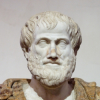
Aristotle
Aristotle was a Greek philosopher and scientist born in the city of Stagira, Chalkidice, on the northern periphery of Classical Greece. His father, Nicomachus, died when Aristotle was a child, whereafter Proxenus of Atarneus became his guardian. At eighteen, he joined Plato's Academy in Athens and remained there until the age of thirty-seven. His writings cover many subjects – including physics, biology, zoology, metaphysics, logic, ethics, aesthetics, poetry, theater, music, rhetoric, linguistics, politics and government – and constitute the first comprehensive system...
NationalityGreek
ProfessionPhilosopher
The shape of the heaven is of necessity spherical; for that is the shape most appropriate to its substance and also by nature primary.
The body is at its best between the ages of thirty and thirty-five.
Evils draw men together.
It is evidently equally foolish to accept probable reasoning from a mathematician and to demand from a rhetorician demonstrative proofs.
For even they who compose treatises of medicine or natural philosophy in verse are denominated Poets: yet Homer and Empedocles have nothing in common except their metre; the former, therefore, justly merits the name of the Poet; while the other should rather be called a Physiologist than a Poet.
All that one gains by falsehood is, not to be believed when he speaks the truth.
Neither by nature, then, nor contrary to nature do the virtues arise in us; rather we are adapted by nature to receive them, and are made perfect by habit.
Since music has so much to do with the molding of character, it is necessary that we teach it to our children.
We are what we continually do...
Happiness is the reward of virtue.
That which is impossible and probable is better than that which is possible and improbable.
Temperance and bravery, then, are ruined by excess and deficiency, but preserved by the mean.
It is the mark of an educated mind to expect that amount of exactness which the nature of the particular subject admits. It is equally unreasonable to accept merely probable conclusions from a mathematician and to demand strict demonstration from an orator.
A person's life persuades better than his word.