Arthur Schopenhauer
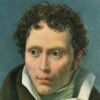
Arthur Schopenhauer
Arthur Schopenhauerwas a German philosopher. He is best known for his 1818 work The World as Will and Representation, in which he characterizes the phenomenal world as the product of a blind, insatiable, and malignant metaphysical will. Proceeding from the transcendental idealism of Immanuel Kant, Schopenhauer developed an atheistic metaphysical and ethical system that has been described as an exemplary manifestation of philosophical pessimism, rejecting the contemporaneous post-Kantian philosophies of German idealism. Schopenhauer was among the first thinkers in Western...
NationalityGerman
ProfessionPhilosopher
Date of Birth22 February 1788
CountryGermany
It is only in the microscope that our life looks so big. It is an indivisible point, drawn out and magnified by the powerful lenses of Time and Space.
What give all that is tragic, whatever its form, the characteristic of the sublime, is the first inkling of the knowledge that the world and life can give no satisfaction, and are not worth our investment in them. The tragic spirit consists in this. Accordingly it leads to resignation.
One can never read too little of bad, or too much of good books: bad books are intellectual poison; they destroy the mind. In order to read what is good one must make it a condition never to read what is bad; for life is short, and both time and strength limited.
It is difficult to keep quiet if you have nothing to do
To be shocked at how deeply rejection hurts is to ignore what acceptance involves. We must never allow our suffering to be compounded by suggestions that there is something odd in suffering so deeply. There would be something amiss if we didn't.
Optimism is not only a false but also a pernicious doctrine, for it presents life as a desirable state and man's happiness as its aim and object. Starting from this, everyone then believes he has the most legitimate claim to happiness and enjoyment. If, as usually happens, these do not fall to his lot, he believes that he suffers an injustice, in fact that he misses the whole point of his existence.
The art of not reading is a very important one. It consists in not taking an interest in whatever may be engaging the attention of the general public at any particular time. When some political or ecclesiastical pamphlet, or novel, or poem is making a great commotion, you should remember that he who writes for fools always finds a large public. A precondition for reading good books is not reading bad ones: for life is short.
Night gives a black look to everything, whatever it may be.
Were an Asiatic to ask me for a definition of Europe, I should be forced to answer him: It is that part of the world which is haunted by the incredible delusion that man was created out of nothing, and that his present birth is his first entrance into life.
First the truth is ridiculed. Then it meets outrage. Then it is said to have been obvious all along.
There is a wide difference between the original thinker and the merely learned man.
If life — the craving for which is the very essence of our being — were possessed of any positive intrinsic value, there would be no such thing as boredom at all: mere existence would satisfy us in itself, and we should want for nothing.
Talent is like a marksman who hits a target which others cannot reach; genius is like a marksman who hits a target which others cannot see.
The alchemists in their search for gold discovered many other things of greater value.