Arthur Schopenhauer
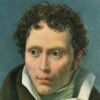
Arthur Schopenhauer
Arthur Schopenhauerwas a German philosopher. He is best known for his 1818 work The World as Will and Representation, in which he characterizes the phenomenal world as the product of a blind, insatiable, and malignant metaphysical will. Proceeding from the transcendental idealism of Immanuel Kant, Schopenhauer developed an atheistic metaphysical and ethical system that has been described as an exemplary manifestation of philosophical pessimism, rejecting the contemporaneous post-Kantian philosophies of German idealism. Schopenhauer was among the first thinkers in Western...
NationalityGerman
ProfessionPhilosopher
Date of Birth22 February 1788
CountryGermany
A man finds himself, to his great astonishment, suddenly existing, after thousands and thousands of years of non-existence: he lives for a little while; and then, again, comes an equally long period when he must exist no more. The heart rebels against this, and feels that it cannot be true.
Buying books would be a good thing if one could also buy the time to read them in: but as a rule the purchase of books is mistaken for the appropriation of their contents.
Because people have no thoughts to deal in, they deal cards, and try and win one another's money. Idiots!
In action a great heart is the chief qualification. In work, a great head.
Great men are like eagles, and build their nest on some lofty solitude.
For an author to write as he speaks is just as reprehensible as the opposite fault, to speak as he writes; for this gives a pedantic effect to what he says, and at the same time makes him hardly intelligible.
He who does not enjoy solitude will not love freedom.
The deep pain that is felt at the death of every friendly soul arises from the feeling that there is in every individual something which is inexpressible, peculiar to him alone, and is, therefore, absolutely and irretrievably lost.
Man may have the most excellent judgment in all other matters, and yet go wrong in those which concern himself; because here the will comes in and deranges the intellect at once. Therefore let a man take counsel of a friend. A doctor can cure everyone but himself; if he falls ill, he sends for a colleague.
It is only in the microscope that our life looks so big.
The business of the novelist is not to relate great events, but to make small ones interesting.
Just as the largest library, badly arranged, is not so useful as a very moderate one that is well arranged, so the greatest amount of knowledge, if not elaborated by our own thoughts, is worth much less than a far smaller volume that has been abundantly and repeatedly thought over.
Every man takes the limits of his own field of vision for the limits of the world.
There are two things which make it impossible to believe that this world is the successful work of an all-wise, all-good, and at the same time, all-powerful being; firstly, the misery which abounds in it everywhere; and secondly, the obvious imperfection of its highest product, man, who is a burlesque of what he should be.