Arthur Schopenhauer
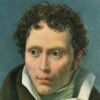
Arthur Schopenhauer
Arthur Schopenhauerwas a German philosopher. He is best known for his 1818 work The World as Will and Representation, in which he characterizes the phenomenal world as the product of a blind, insatiable, and malignant metaphysical will. Proceeding from the transcendental idealism of Immanuel Kant, Schopenhauer developed an atheistic metaphysical and ethical system that has been described as an exemplary manifestation of philosophical pessimism, rejecting the contemporaneous post-Kantian philosophies of German idealism. Schopenhauer was among the first thinkers in Western...
NationalityGerman
ProfessionPhilosopher
Date of Birth22 February 1788
CountryGermany
To overcome difficulties is to experience the full delight of existence.
universal compassion is the only guarantee of morality.
Mankind cannot get on without a certain amount of absurdity.
A man can do what he wants, but not want what he wants.
Honor means that a man is not exceptional; fame, that he is. Fame is something which must be won; honor, only something which must not be lost.
To read a book is to hold an entire world in the palm of your hand. That world is unique to you; no two readers can ever inhabit the same world
If a man wants to read good books, he must make a point of avoiding bad ones; for life is short, and time and energy limited.
Style is what gives value and currency to thoughts.
It is a wise thing to be polite; consequently, it is a stupid thing to be rude. To make enemies by unnecessary and willful incivility, is just as insane a proceeding as to set your house on fire. For politeness is like a counter--an avowedly false coin, with which it is foolish to be stingy.
Compassion is the basis of morality.
Life is short and truth works far and lives long: let us speak the truth.
Every state of welfare, every feeling of satisfaction, is negative in its character; that is to say, it consists in freedom from pain, which is the positive element of existence.
A man's knowledge may be said to be mature, in other words, when it has reached the most complete state of perfection to which he, as an individual, is capable of bringing it, when an exact correspondence is established between the whole of his abstract ideas and the things he has actually perceived for himself. His will mean that each of his abstract ideas rests, directly or indirectly, upon a basis of observation, which alone endows it with any real value; and also that he is able to place every observation he makes under the right abstract idea which belongs to it.
I am often surprised by the cleverness, and now and again by the stupidity, of my dog; and I have similar experiences with mankind.