Arthur Schopenhauer
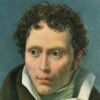
Arthur Schopenhauer
Arthur Schopenhauerwas a German philosopher. He is best known for his 1818 work The World as Will and Representation, in which he characterizes the phenomenal world as the product of a blind, insatiable, and malignant metaphysical will. Proceeding from the transcendental idealism of Immanuel Kant, Schopenhauer developed an atheistic metaphysical and ethical system that has been described as an exemplary manifestation of philosophical pessimism, rejecting the contemporaneous post-Kantian philosophies of German idealism. Schopenhauer was among the first thinkers in Western...
NationalityGerman
ProfessionPhilosopher
Date of Birth22 February 1788
CountryGermany
A man who has not enough originality to think out a new title for his book will be much less capable of giving it new contents.
Honor has not to be won; it must only not be lost.
As the biggest library if it is in disorder is not as useful as a small but well-arranged one, so you may accumulate a vast amount of knowledge but it will be of far less value than a much smaller amount if you have not thought it over for yourself.
When a new truth enters the world, the first stage of reaction to it is ridicule, the second stage is violent opposition, and in the third stage, that truth comes to be regarded as self-evident.
To live alone is the fate of all great souls.
A sense of humour is the only divine quality of man
Every miserable fool who has nothing at all of which he can be proud, adopts as a last resource pride in the nation to which he belongs; he is ready and happy to defend all its faults and follies tooth and nail, thus reimbursing himself for his own inferiority.
Will power is to the mind like a strong blind man who carries on his shoulders a lame man who can see.
All religions promise a reward beyond this life in eternity for excellences of the will or heart, but none for excellences of the head, of the understanding.
If, while hurrying ostensibly to the temple of truth, we hand the reins over to our personal interests which look aside at very different guiding stars, for instance at the tastes and foibles of our contemporaries, at the established religion, but in particular at the hints and suggestions of those at the head of affairs, then how shall we ever reach the high, precipitous, bare rock whereon stands the temple of truth?
Still, instead of trusting what their own minds tell them, men have as a rule a weakness for trusting others who pretend to supernatural sources of knowledge.
This world could not have been the work of an all-loving being, but that of a devil, who had brought creatures into existence in order to delight in the sight of their sufferings.
Just as one spoils the stomach by overfeeding and thereby impairs the whole body, so can one overload and choke the mind by giving it too much nourishment. For the more one reads the fewer are the traces left of what one has read; the mind is like a tablet that has been written over and over. Hence it is impossible to reflect; and it is only by reflection that one can assimilate what one has read. If one reads straight ahead without pondering over it later, what has been read does not take root, but is for the most part lost.
Every hero is a Samson. The strong man succumbs to the intrigues of the weak and the many; and if in the end he loses all patience he crushes both them and himself.