Claude Bernard
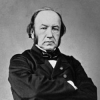
Claude Bernard
Claude Bernardwas a French physiologist. Historian Ierome Bernard Cohen of Harvard University called Bernard "one of the greatest of all men of science". Among many other accomplishments, he was one of the first to suggest the use of blind experiments to ensure the objectivity of scientific observations. He originated the term milieu intérieur, and the associated concept of homeostasis...
NationalityFrench
ProfessionScientist
Date of Birth12 July 1813
CityRhone, France
CountryFrance
Descriptive anatomy is to physiology what geography is to history, and just as it is not enough to know the typography of a country to understand its history, so also it is not enough to know the anatomy of organs to understand their functions.
Put off your imagination, as you put off your overcoat, when you enter the laboratory. Put it on again, as you put on your overcoat, when you leave.
Hatred is the most clear- sighted, next to genius....
The terrain is everything; the germ is nothing,
The investigator should have a robust faith - and yet not believe.
The doubter is a true man of science: he doubts only himself and his interpretations, but he believes in science.
Art is 'I'; science is 'we'.
We must alter theory to adapt it to nature, but not nature to adapt it to theory.
Men who believe too firmly in their theories, do not believe enough in the theories of others. So ... these despisers of their fellows ... make experiments only to destroy a theory, instead of to seek the truth.
Man can learn nothing unless he proceeds from the known to the unknown.
Those who do not know the torment of the unknown cannot have the joy of discovery.
Science increases our power in proportion as it lowers our pride.
Men who have excessive faith in their theories or ideas are not only ill prepared for making discoveries; they also make very poor observations. Of necessity, they observe with a preconceived idea, and when they devise an experiment, they can see, in its results,only a confirmation of their theory. In this way they distort observation and often neglect very important facts because they do not further their aim.
The experimenter who does not know what he is looking for will not understand what he finds.