David Hume
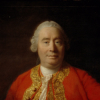
David Hume
David Hume– 25 August 1776) or David Homewas a Scottish philosopher, historian, economist, and essayist, who is best known today for his highly influential system of radical philosophical empiricism, skepticism, and naturalism...
NationalityScottish
ProfessionPhilosopher
Date of Birth7 May 1711
kindness liberty lost seldom
It is seldom that liberty of any kind is lost all at once.
liberty free-will projects
But to proceed in this reconciling project with regard to the question of liberty and necessity; the most contentious question of metaphysics, the most contentious science...
liberty lines may
A Tory..., since the revolution, may be defined in a few words, to be a lover of monarchy, though without abandoning liberty; anda partizan of the family of Stuart. As a Whig may be defined to be a lover of liberty though without renouncing monarchy; and a friend to the settlement in the protestant line.
thinking liberty fraud
Liberty of thinking, and of expressing our thoughts, is always fatal to priestly power, and to those pious frauds on which it is commonly founded.
enemy liberty age
In all ages of the world, priests have been enemies of liberty.
liberty kind lost
Liberty of any kind is never lost all at once.
enemy religion liberty
Superstition is an enemy to civil liberty.
men liberty ambitious
Enthusiasm, being the infirmity of bold and ambitious tempers, is naturally accompanied with a spirit of liberty; as superstition,on the contrary, renders men tame and abject, and fits them for slavery.
men order liberty
It is seldom, that liberty of any kind is lost all at once. Slavery has so frightful an aspect to men accustomed to freedom, that it must steal upon them by degrees, and must disguise itself in a thousand shapes, in order to be received.
arises bestow creature eminent human interests merit promote seems sentiment tendency
Upon the whole, then it seems undeniable, that nothing can bestow more merit on any human creature than the sentiment of benevolence in an eminent degree; and that a part at least of its merit arises from its tendency to promote the interests of our
character government law
How could politics be a science, if laws and forms of government had not a uniform influence upon society? Where would be the foundation of morals, if particular characters had no certain or determinate power to produce particular sentiments, and if these sentiments had no constant operation on actions?
beauty reflection mind
If the contemplation, even of inanimate beauty, is so delightful; if it ravishes the senses, even when the fair form is foreign tous: What must be the effects of moral beauty? And what influence must it have, when it embellishes our own mind, and is the result of our own reflection and industry?
doubt religion mystery
The whole [of religion] is a riddle, an ænigma, an inexplicable mystery. Doubt, uncertainty, suspence of judgment appear the onlyresult of our most accurate scrutiny, concerning this subject.
spring intelligent secret
Every disastrous accident alarms us, and sets us on enquiries concerning the principles whence it arose: Apprehensions spring up with regard to futurity: And the mind, sunk into diffidence, terror, and melancholy, has recourse to every method of appeasing those secret intelligent powers, on whom our fortune is supposed entirely to depend.