Flannery O'Connor
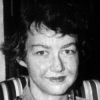
Flannery O'Connor
Mary Flannery O'Connorwas an American writer and essayist. An important voice in American literature, she wrote two novels and 32 short stories, as well as a number of reviews and commentaries. She was a Southern writer who often wrote in a Southern Gothic style and relied heavily on regional settings and grotesque characters. Her writing also reflected her own Roman Catholic faith and frequently examined questions of morality and ethics. Her posthumously-compiled Complete Stories won the 1972 U.S. National Book...
NationalityAmerican
ProfessionNovelist
Date of Birth25 March 1925
CitySavannah, GA
CountryUnited States of America
If there is no possibility for change in a character, we have no interest in him.
In most good stories, it is the character's personality that creates the action of the story. If you start with real personality, a real character, then something is bound to happen.
I use the grotesque the way I do because people are deaf and dumb and need help to see and hear.
All my stories are about the action of grace on a character who is not very willing to support it, but most people think of these stories as hard, hopeless and brutal.
Remember that you don't write a story because you have an idea but because you have a believable character.
Children know by instinct that hell is an absence of love, and they can pick out theirs without missing.
I will rejoice the day when they say: This is right whether we all rot on top of each other or not, dear children, as we certainly may. Either practice restraint or be prepared for crowding...
Poorly written novels--no matter how pious and edifying the behavior of the characters--are not good in themselves and are therefore not really edifying.
I feel that discussing story-writing in terms of plot, character, and theme is like trying to describe the expression on a face by saying where the eyes, nose, and mouth are.
...I have to write to discover what I am doing. Like the old lady, I don't know so well what I think until I see what I say; then I have to say it again.
Writing is like giving birth to a piano sideways. Anyone who perseveres is either talented or nuts.
Nobody with a good car needs to be justified.
I find that most people know what a story is until they sit down to write one. Then they find themselves writing a sketch with an essay woven through it, or an essay with a sketch woven through it, or an editorial with a character in it, or a case history with a moral, or some other mongrel thing.
The basis of art is truth, both in matter and in mode.