Flannery O'Connor
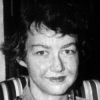
Flannery O'Connor
Mary Flannery O'Connorwas an American writer and essayist. An important voice in American literature, she wrote two novels and 32 short stories, as well as a number of reviews and commentaries. She was a Southern writer who often wrote in a Southern Gothic style and relied heavily on regional settings and grotesque characters. Her writing also reflected her own Roman Catholic faith and frequently examined questions of morality and ethics. Her posthumously-compiled Complete Stories won the 1972 U.S. National Book...
NationalityAmerican
ProfessionNovelist
Date of Birth25 March 1925
CitySavannah, GA
CountryUnited States of America
In the first place you can be so absolutely honest and so absolutely wrong at the same time that I think it is better to be a combination of cautious and polite
I don't think literature would be possible in a determined world. We might go through the motions but the heart would be out of it. Nobody could then 'smile darkly and ignore the howls.' Even if there were no Church to teach me this, writing two novels would do it. I think the more you write, the less inclined you will be to rely on theories like determinism. Mystery isn't something that is gradually evaporating. It grows along with knowledge.
I think it is safe to say that while the South is hardly Christ-centered, it is most certainly Christ-haunted.
Doctors always think anybody doing something they aren't is a quack; also they think all patients are idiots.
In a sense sickness is a place, more instructive than a long trip to Europe, and it's always a place where there's no company, where nobody can follow. Sickness before death is a very appropriate thing and I think those who don't have it miss one of God's mercies,
Mrs. Hopewell had no bad qualities of her own but she was able to use other people's in such a constructive way that she never felt the lack.
No art is sunk in the self, but rather, in art the self becomes self-forgetful in order to meet the demands of the thing seen and the thing being made.
Art transcends its limitations only by staying within them.
Art never responds to the wish to make it democratic; it is not for everybody; it is only for those who are willing to undergo the effort needed to understand it.
There may never be anything new to say, but there is always a new way to say it, and since, in art, the way of saying a thing becomes a part of what is said, every work of art is unique and requires fresh attention.
I feel that whatever virtues the novel may have are very much connected with the limitations you mention. I am not writing a conventional novel, and I think that the quality of the novel I write will derive precisely from the peculiarity or aloneness, if you will, of the experience I write from.
When a book leaves your hands, it belongs to God. He may use it to save a few souls or to try a few others, but I think that for the writer to worry is to take over God's business.
I think there is no suffering greater than what is caused by the doubts of those who want to believe.
It is hard to make your adversaries real people unless you recognize yourself in them - in which case, if you don't watch out, they cease to be adversaries.