Harold Pinter
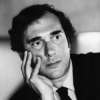
Harold Pinter
Harold Pinter CH CBEwas a Nobel Prize-winning English playwright, screenwriter, director and actor. One of the most influential modern British dramatists, his writing career spanned more than 50 years. His best-known plays include The Birthday Party, The Homecoming, and Betrayal, each of which he adapted for the screen. His screenplay adaptations of others' works include The Servant, The Go-Between, The French Lieutenant's Woman, The Trial, and Sleuth. He also directed or acted in radio, stage, television, and film productions of...
NationalityEnglish
ProfessionPlaywright
Date of Birth10 October 1930
Occasionally it does hit me, the words on a page. And I still love doing that, as I have for the last 60 years.
One's life has many compartments.
It’s very difficult to feel contempt for others when you see yourself in the mirror.
Be careful how you talk about God. He's the only God we have. If you let him go he won't come back. He won't even look back over his shoulder. And then what will you do?
As a writer you're holding a dog. You let the dog run about. But you finally can pull him back. Finally, I'm in control. But the great excitement is to see what happens if you let the whole thing go. And the dog or the character really runs about, bites everyone in sight, jumps up trees, falls into lakes, gets wet, and you let that happen. That's the excitement of writing plays-to allow the thing to be free but still hold the final leash.
I don't give a damn what other people think. It's entirely their own business. I'm not writing for other people.
I sometimes wish desperately that I could write like someone else, be someone else. No one particularly. Just if I could put the pen down on paper and suddenly come out in a totally different way.
All that happens is that the destruction of human beings - unless they're Americans - is called collateral damage.
I would never use obscene language in the office. Certainly not. I kept my obscene language for the home, where it belongs.
There are no hard distinctions between what is real and what is unreal, nor between what is true and what is false. A thing is not necessarily either true or false; it can be both true and false.
I was brought up in the War. I was an adolescent in the Second World War. And I did witness in London a great deal of the Blitz.
I'll tell you what I really think about politicians. The other night I watched some politicians on television talking about Vietnam. I wanted very much to burst through the screen with a flame thrower and burn their eyes out and their balls off and then inquire from them how they would assess the action from a political point of view.
Apart from the known and the unknown, what else is there?
I know little of women. But I've heard dread tales.