Harold Pinter
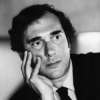
Harold Pinter
Harold Pinter CH CBEwas a Nobel Prize-winning English playwright, screenwriter, director and actor. One of the most influential modern British dramatists, his writing career spanned more than 50 years. His best-known plays include The Birthday Party, The Homecoming, and Betrayal, each of which he adapted for the screen. His screenplay adaptations of others' works include The Servant, The Go-Between, The French Lieutenant's Woman, The Trial, and Sleuth. He also directed or acted in radio, stage, television, and film productions of...
NationalityEnglish
ProfessionPlaywright
Date of Birth10 October 1930
The weasel under the cocktail cabinet.
I don't write with any audience in mind. I just write. I take a chance on the audience. That's what I did originally, and I think it's worked--in the sense that I find there is an audience.
I never think of myself as wise. I think of myself as possessing a critical intelligence which I intend to allow to operate.
When the storm is over and night falls and the moon is out in all its glory and all you're left with is the rhythm of the sea, of the waves, you know what God intended for the human race, you know what paradise is.
I suggest that US foreign policy can still be defined as "kiss my ass or I'll kick your head in." But of course it doesn't put it like that. It talks of "low intensity conflict..." What all this adds up to is a disease at the very centre of language, so that language becomes a permanent masquerade, a tapestry of lies.
Sometimes you feel you have the truth of a moment in your hand, then it slips through your fingers and is lost.
Watching first nights, though I've seen quite a few by now, is never any better. It's a nerve-racking experience. It's not a question of whether the play goes well or badly. It's not the audience reaction, it's my reaction. I'm rather hostile toward audiences—I don't much care for large bodies of people collected together. Everyone knows that audiences vary enormously; it's a mistake to care too much about them. The thing one should be concerned with is whether the performance has expressed what one set out to express in writing the play. It sometimes does.
I tend to think that cricket is the greatest thing that God ever created on earth - certainly greater than sex, although sex isn't too bad either.
Referees are the law. They have a whistle. They blow it. And that whistle is the articulation of God's justice.
Do the structures of language and the structures of reality (by which I mean what actually happens) move along parallel lines? Does reality essentially remain outside language, separate, obdurate, alien, not susceptible to description? Is an accurate and vital correspondence between what is and our perception of it impossible? Or is it that we are obliged to use language only in order to obscure and distort reality -- to distort what happens -- because we fear it?
The past is what you remember, imagine you remember, convince yourself you remember, or pretend you remember
This particular nurse said, Cancer cells are those which have forgotten how to die. I was so struck by this statement.
A writer's life is a highly vulnerable, almost naked activity. We don't have to weep about that. The writer makes his choice and is stuck with it. But it is true to say that you are open to all the winds, some of them icy indeed. You are out on your own, out on a limb. You find no shelter, no protection - unless you lie - in which case of course you have constructed your own protection and, it could be argued, become a politician.
The more acute the experience, the less articulate its expression.