Immanuel Kant
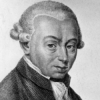
Immanuel Kant
Immanuel Kantwas a German philosopher who is considered the central figure of modern philosophy. Kant argued that fundamental concepts of the human mind structure human experience, that reason is the source of morality, that aesthetics arises from a faculty of disinterested judgment, that space and time are forms of our sensibility, and that the world as it is "in-itself" is unknowable. Kant took himself to have effected a Copernican revolution in philosophy, akin to Copernicus' reversal of the age-old belief...
NationalityGerman
ProfessionPhilosopher
Date of Birth22 April 1724
CountryGermany
It is precisely in knowing its limits that philosophy consists.
The schematicism by which our understanding deals with the phenomenal world ... is a skill so deeply hidden in the human soul that we shall hardly guess the secret trick that Nature here employs.
The means employed by Nature to bring about the development of all the capacities of men is their antagonism in society, so far as this is, in the end, the cause of a lawful order among men.
Sincerity is the indispensable ground of all conscientiousness, and by consequence of all heartfelt religion.
Moral Teleology supplies the deficiency in physical Teleology , and first establishes a Theology ; because the latter, if it did not borrow from the former without being observed, but were to proceed consistently, could only found a Demonology , which is incapable of any definite concept.
A single line in the Bible has consoled me more than all the books I ever read besides.
Philosophy stands in need of a science which shall determine the possibility, principles, and extent of human knowledge à priori.
Happiness, though an indefinite concept, is the goal of all rational beings
Better the whole people perish than that injustice be done
All trades, arts, and handiworks have gained by division of labor... Where the different kinds of work are not distinguished and divided, where everyone is a jack-of-all-trades, there manufactures remain still in the greatest barbarism.
All false art, all vain wisdom, lasts its time but finally destroys itself, and its highest culture is also the epoch of its decay.
Law And Freedom without Violence (Anarchy) Law And Violence without Freedom (Despotism) Violence without Freedom And Law (Barbarism) Violence with Freedom And Law (Republic)
Act only according to that maxim whereby you can at the same time will that it should become a universal law.
Patience is the strength of the weak, impatience is the weakness of the strong.