Ingmar Bergman
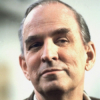
Ingmar Bergman
Ernst Ingmar Bergman; 14 July 1918 – 30 July 2007) was a Swedish director, writer and producer who worked in film, television, and theatre. He is recognized as one of the most accomplished and influential auteurs of all time and is most famous for films such as The Seventh Seal, Wild Strawberries, Persona, Cries and Whispersand Fanny and Alexander...
NationalitySwedish
ProfessionDirector
Date of Birth14 July 1918
CityUppsala, Sweden
CountrySweden
No other art-medium–neither painting nor poetry–can communicate the specific quality of the dream as well as the film can. When the lights go down in the cinema and this white shining point opens up for us, our gaze stops flitting hither and thither, settles and becomes quite steady. We just sit there, letting the images flow out over us. Our will ceases to function. We lose our ability to sort things out and fix them in their proper places. We're drawn into a course of events–we're participants in a dream. And manufacturing dreams, that's a juicy business.
We make each other alive; it doesn’t make a difference if it hurts.
When you feel perpetually unmotivated, you start questioning your existence in an unhealthy way; everything becomes a pseudo intellectual question you have no interest in responding whatsoever. This whole process becomes your very skin and it does not merely affect you; it actually defines you. So, you see yourself as a shadowy figure unworthy of developing interest, unworthy of wondering about the world - profoundly unworthy in every sense and deeply absent in your very presence.
I make all my decisions on intuition. But then, I must know why I made that decision. I throw a spear into the darkness. That is intuition. Then I must send an army into the darkness to find the spear. That is intellect.
Old age is like climbing a mountain. You climb from ledge to ledge. The higher you get, the more tired and breathless you become, but your views become more extensive.
My discovery of Tarkovsky's first film was like a miracle. Suddenly, I found myself standing at the door of a room the keys of which had, until then, never been given to me. It was a room I had always wanted to enter and where he was moving freely and fully at ease. I felt encouraged and stimulated: someone was expressing what I had always wanted to say without knowing how. Tarkovsky is for me the greatest, the one who invented a new language, true to the nature of film, as it captures life as a reflection, life as a dream.
No form of art goes beyond ordinary consciousness as film does, straight to our emotions, deep into the twilight room of the soul.
I am living permanently in my dream, from which I make brief forays into reality.
Here, in my solitude, I have the feeling that I contain too much humanity.
Then I felt that every inflection of my voice, every word in my mouth, was a lie, a play whose sole purpose was to cover emptiness and boredom. There was only one way I could avoid a state of despair and a breakdown. To be silent. And to reach behind the silence for clarity or at least try to collect the resources that might still be available to me.
I was a very unpleasant young man. If I met the young Ingmar today I'd say, 'You're very talented and I'll try to help you, but I don't want anything else to do with you.
Art lost its basic creative drive the moment it was separated from worship. It severed an umbilical cord and now lives its own sterile life, generating and degenerating itself. In former days the artist remained unknown and his work was to the glory of God.
I think I have made just one picture that I really like...
People ask what are my intentions with my films - my aims. It is a difficult and dangerous question, and I usually give an evasive answer...