Jacques Ellul
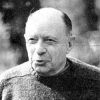
Jacques Ellul
Jacques Ellulwas a French philosopher, professor, sociologist, lay theologian, and Christian anarchist. Ellul was a longtime Professor of History and the Sociology of Institutions on the Faculty of Law and Economic Sciences at the University of Bordeaux. A prolific writer, he authored 58 books and more than a thousand articles over his lifetime, many of which discussed propaganda, the impact of technology on society, and the interaction between religion and politics. The dominant theme of his work proved to be...
NationalityFrench
ProfessionPhilosopher
Date of Birth6 January 1912
CountryFrance
According to the International Institute for Environment and Development, the annual amount spent globally on advertising aimed at increasing consumption topped $430 billion in 1998.Consumer capitalism is dedicated to the proposition that production is good in itself, no matter what is produced. The net effect is the massive production of absurd, empty and useless items which are nevertheless utterly serious since we earn our living from them, and dedicate our leisure time to them.
Salvation is universal because the love of God encompasses all. If God is God and if God is love, nothing is outside the love of God. A place like hell is thus inconceivable.
Philosophy which asserts that human experience repeats itself is ineffectual.
And an apprenticeship to whatever gadgetry is useful in a technical world
Everyone has been taught that technique is an application of science.... This traditional view is radically false. It takes into account only a single category of science and only a short period of time
When there is propaganda, we are no longer able to evaluate certain questions, or even to discuss them
Technical civilization has made a great error in not suppressing death, the only human reality still intact
It is not true that the perfection of police power is the result of the state's Machiavellianism or of some transitory influence. The whole structure of society of society implies it, of necessity. The more we mobilize the forces of nature, the more must we mobilize men and the more do we require order
Having analyzed these traits, we can now advance a definition of propaganda not an exhaustive definition, unique and exclusive of all others, but at least a partial one: Propaganda is a set of methods employed by an organized group that wants to bring about the active or passive participation in its actions of a mass of individuals, psychologically unified through psychological manipulations and incorporated in an organization.
No technique is possible when men are free.... Technique requires predictability and, no less, exactness of prediction. It is necessary, then, that technique prevail over the human being.
The individual who is the servant of technique must be completely unconscious of himself.
It was with the Industrial Revolution, as society plunged ever more eagerly into the conquest of material riches and bent all its energies to the accumulation of goods, that material poverty became a major problem. Obviously, this meant abandonment or downgrading of spiritual values, virtue, etc. To share or not to share in the increase of the collective wealth-this was the Number One question. It was the desire to acquire wealth that prompted the poor to start fighting.
No one knows where we are going, the aim of life has been forgotten, the end has been left behind. Man has set out at tremendous speed- to go nowhere.
Hate, hunger, and pride make better levers of propaganda than do love or impartiality.