Jacques Ellul
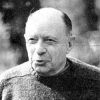
Jacques Ellul
Jacques Ellulwas a French philosopher, professor, sociologist, lay theologian, and Christian anarchist. Ellul was a longtime Professor of History and the Sociology of Institutions on the Faculty of Law and Economic Sciences at the University of Bordeaux. A prolific writer, he authored 58 books and more than a thousand articles over his lifetime, many of which discussed propaganda, the impact of technology on society, and the interaction between religion and politics. The dominant theme of his work proved to be...
NationalityFrench
ProfessionPhilosopher
Date of Birth6 January 1912
CountryFrance
Propaganda begins when dialogue ends.
Almost always, it is the conviction that 'I am right' or 'my cause is the cause of justice' that triggers violence. That is, ...the moment propaganda does its work, violence is unleashed. And violence can be reduced by countering this propaganda.
The will of the world is always a will to death, a will to suicide. We must not accept this suicide, and we must so act that it cannot take place.
For in a civilization which has lost the meaning of life, the most important thing a Christian can do is to live, and life, understood from the point of view of faith, has an extraordinary explosive force.
Education no longer has a humanist end or any value in itself; it has only one goal, to create technicians.
Propaganda does not aim to elevate man, but to make him serve .
Christians have always tended to transform the Christian Revelation into a Christian religion. Christianity is said to be a religion like any other or, conversely, some Christians try to show that it is a better religion than the others. People attempt to take possession of God. Theology claims to explain everything, including the being of God. People tend to transform Christianity into a religion because the Christian faith obviously places people in an extremely uncomfortable position that of freedom guided only by love and all in the context of God's radical demand that we be holy.
The biblical teaching is clear. It always contests political power . It incites to "counterpower," to "positive" criticism , to an irreducible dialogue (like that between king and prophet in Israel ), to antistatism, to a decentralizing of the relation, to an extreme relativizing of everything political, to an anti-ideology, to a questioning of all that claims either power or dominion (in other words, of all things political), and finally, if we may use a modern term, to a kind of " anarchism " (so long as we do not relate the term to the anarchist teaching of the nineteenth century).
Christians should be troublemakers, creators of uncertainty, agents of a dimension incompatible with society.
Technique has taken over the whole of civilization. Death, procreation, birth all submit to technical efficiency and systemization.
Am I a pessimist? Not at all. I am convinced that the history of the human race, no matter how tragic, will ultimately lead to the Kingdom of God. I am convinced that all the works of humankind will be reintegrated in the work of God, and that each of us, no matter how sinful, will ultimately be saved.
The fact of knowing how to read is nothing, the whole point is knowing what to read.
When God picks out a man and speaks to him, it is to engage him in a work, an action. Nowhere in Scripture do we find indeterminate or purely mystical vocation.
No matter what God's power may be, the first aspect of God is never that of the absolute Master, the Almighty. It is that of the God who puts himself on our human level and limits himself.