Jacques Ellul
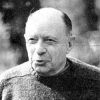
Jacques Ellul
Jacques Ellulwas a French philosopher, professor, sociologist, lay theologian, and Christian anarchist. Ellul was a longtime Professor of History and the Sociology of Institutions on the Faculty of Law and Economic Sciences at the University of Bordeaux. A prolific writer, he authored 58 books and more than a thousand articles over his lifetime, many of which discussed propaganda, the impact of technology on society, and the interaction between religion and politics. The dominant theme of his work proved to be...
NationalityFrench
ProfessionPhilosopher
Date of Birth6 January 1912
CountryFrance
The goal of modern propaganda is no longer to transform opinion but to arouse an active and mythical belief
Technological society leads to increasing numbers of people who cannot adapt to the inhuman rhythm of modern life with its emphasis on specialization. A class of people is growing up who are unexploitable because they are not worth employing even for the minimum wage. Technological progress makes whole categories of people useless without making it possible to support them with the wealth produced by the progress.
The person who imagined that he could not be the victim of propaganda because he could distinguish truth from falsehood, is extremely susceptible to propaganda, because when propaganda does tell the truth, he is then convinced that it is no longer propaganda: moreover, his self-confidence makes him all the more vulnerable to attacks of which he is unaware.
Enclosed within his artificial creation, man finds that there is “no exit”; that he cannot pierce the shell of technology again to find the ancient milieu to which he was adapted for hundreds of thousands of years . In our cities there is no more day or night or heat or cold. But there is overpopulation, thralldom to press and television, total absence of purpose. All men are constrained by means external to them to ends equally external. The further the technical mechanism develops that allows us to escape natural necessity, the more we are subjected to artificial technical necessities.
We are not to make the Torah into God Himself, nor the Bible into a "paper pope." The Bible is only the result of the Word of God. We can experience the return of the Word of God in the here and now, the perpetual return of the actual, living, indisputable Word of God that makes possible the act of witnessing, but we should never think of the Bible as any sort of talisman or oracle constantly at our disposal that we need only open and read to be in relation to the Word of God and God Himself.
One thing, however, is sure: unless Christians fulfill their prophetic role, unless they become the advocates and defenders of the truly poor, witness to their misery, then, infallibly, violence will suddenly break out. In one way or another 'their blood cries to heaven,' and violence will seem the only way out. It will be too late to try to calm them and create harmony.
Modern technology has become a total phenomenon for civilization, the defining force of a new social order in which efficiency is no longer an option but a necessity imposed on all human activity.
If the ruler wants to play the game by himself and follow secret policies, he must present a decoy to the masses. He cannot escape the mass; but he can draw between himself and that mass an invisible curtain, a screen, on which the mass will see projected the mirage of some politics, while the real politics are being made behind it.
Prayer is not a discourse. It is a form of life, the life with God. That is why it is not confined to the moment of verbal statement.
Belief is reassuring. People who live in the world of belief feel safe. On the contrary, faith is forever placing us on the razor's edge.
It is the multiplication of men who are exluded from working which provokes war. We ought at least to bear this in mind when we boast of the continual decrease in human participation in technical operations.
Again I want to emphasize that the study of propaganda must be conducted within the context of a technological society. Propaganda is called upon to solve problems created by technology, to play on maladjustments, and to integrate the individual into a technological world.
Christians were never meant to be normal. We’ve always been holy troublemakers, we’ve always been creators of uncertainty, agents of dimension that’s incompatible with the status quo; we do not accept the world as it is, but we insist on the world becoming the way that God wants it to be. And the Kingdom of God is different from the patterns of this world.
Propaganda tries first of all to create conditioned reflexes in the individual so that certain words, signs, or symbols, even certain persons or facts, provoke unfailing reactions...The important thing is that when the time is ripe, the individual can be thrown into action by the utilization of the psychological levers that have been set up...