Jacques Ellul
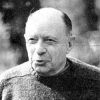
Jacques Ellul
Jacques Ellulwas a French philosopher, professor, sociologist, lay theologian, and Christian anarchist. Ellul was a longtime Professor of History and the Sociology of Institutions on the Faculty of Law and Economic Sciences at the University of Bordeaux. A prolific writer, he authored 58 books and more than a thousand articles over his lifetime, many of which discussed propaganda, the impact of technology on society, and the interaction between religion and politics. The dominant theme of his work proved to be...
NationalityFrench
ProfessionPhilosopher
Date of Birth6 January 1912
CountryFrance
The biblical God lets us make our own history, and goes with us on the more or less unheard-of adventures we concoct.
Propaganda must not concern itself with what is best in man - the highest goals humanity sets for itself, its noblest and most precious feelings. Propaganda does not aim to elevate man, but to make him serve. It must therefore utilize the most common feelings, the most widespread ideas, the crudest patterns, and in so doing place itself on a very low level with regard to what it wants man to do and to what end. Hate, hunger, and pride make better levers of propaganda than do love or impartiality.
The propagandist must utilize all of the technical means at his disposal - the press, radio, TV, movies, posters, meetings, door-to-door canvassing...There is no propaganda as long as one makes use, in a sporadic fashion and at random, of a newspaper article here, a poster or radio program there.
Propaganda's content increasingly resembles information. It has even clearly been proved that a violent, excessive, shock-provoking propaganda texts leads ultimately to less conviction and participation. The listeners critical powers decrease if the propaganda message is more rational and less violent.
If I rule out violent anarchism, there remains pacifist, anti-nationalist, anti-capitalist, moral, and anti-democratic anarchism (i.e., that which is hostile to the falsified democracy of bourgeois states). There remains the anarchism which acts by means of persuasion, by the creation of small groups and networks, denouncing falsehood and oppression, aiming at a true overturning of authorities of all kinds as people at the bottom speak and organize themselves.
Science brings to the light of day everything man had believed sacred. Technique takes possession of it and enslaves it.
because of the myth of progress, it is much easier to sell a man an electric razor than a straight-edged one.
The intellectual who wants to do her work properly must today go back to the starting point: the woman whom she knows, and first of all to herself. It is at that level, and at no other, that she ought to begin to think about the world situation.
Prayer holds together the shattered fragments of creation. It makes history possible.
This is where each individual must decide for himself. The essential thing is the decision to challenge the modern state, which without this small group of protesters will be checked by neither brake, value, nor reason.
People think that they have no right to judge a fact all they have to do is to accept it. Thus from the moment that technics, the State, or production, are facts, we must worship them as facts, and we must try to adapt ourselves to them. This is the very heart of modern religion, the religion of the established fact, the religion on which depend the lesser religions of the dollar, race, or the proletariat , which are only expressions of the great modern divinity , the Moloch of fact.
To the ideal of high consumption and the downgrading of spiritual values corresponds a conception of injustice that centers exclusively on the problem of consumption; and equality in consumption cannot be achieved except by violence.
Fate operates when people give up
It is inconceivable that the God who gives Himself in His Son to save us, should have created some people ordained to evil and damnation. There can only be one predestination to salvation. In and through Jesus Christ all people are predestined to be saved. Our free choice is ruled out in this regard. God wants free people, except in relation to this last and definitive decision. We are not free to decide and choose to be damned.