John Adams
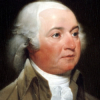
John Adams
John Adamswas an American lawyer, author, statesman, and diplomat. He served as the second President of the United States, the first Vice President, and as a Founding Father was a leader of American independence from Great Britain. Adams was a political theorist in the Age of Enlightenment who promoted republicanism and a strong central government. His innovative ideas were frequently published. He was also a dedicated diarist and correspondent, particularly with his wife and key advisor Abigail...
NationalityAmerican
ProfessionPresident
Date of Birth30 October 1735
CountryUnited States of America
My best wishes, in the joys, and festivities, and the solemn services of that day on which will be completed the fiftieth year from its birth, of the independence of the United States: a memorable epoch in the annals of the human race, destined in future history to form the brightest or the blackest page, according to the use or the abuse of those political institutions by which they shall, in time to come, be shaped by the human mind.
It is folly to anticipate evils, and madness to create imaginary ones.
Suppose a nation, rich and poor, high and low, ten millions in number, all assembled together; not more than one or two millions will have lands, houses, or any personal property; if we take into the account the women and children, or even if we leave them out of the question, a great majority of every nation is wholly destitute of property, except a small quantity of clothes, and a few trifles of other movables.
Children should be educated and instructed in the principles of freedom. Aristotle speaks plainly to this purpose, saying, 'that the institution of youth should be accommodated to that form of government under which they live; forasmuch as it makes exceedingly for the preservation of the present government, whatsoever it be.
Will you tell me how to prevent riches from producing luxury? Will you tell me how to prevent luxury from producing effeminacy, intoxication, extravagance, vice and folly?
We have no Constitution which functions in the absence of a moral people
The only way to form an army to be confided in, was a systematic discipline, by which means all men may be made heroes.
When public virtue is gone, when the national spirit is fled the republic is lost in essence, though it may still exist in form
A constitution founded on these principles introduces knowledge among the people, and inspires them with a conscious dignity becoming freemen; a general emulation takes place, which causes good humor, sociability, good manners, and good morals to be general. That elevation of sentiment inspired by such a government, makes the common people brave and enterprising. That ambition which is inspired by it makes them sober, industrious, and frugal.
As to the history of the revolution, my ideas may be peculiar, perhaps singular. What do we mean by the revolution? The war? That was no part of the revolution; it was only an effect and consequence of it. The revolution was in the minds of the people, and this was effected from 1760 to 1775, in the course of fifteen years, before a drop of blood was shed at Lexington.
To suppose arms in the hands of citizens, to be used at individual discretion, except in private self-defense, or by partial orders of towns, counties or districts of a state, is to demolish every constitution, and lay the laws prostrate, so that liberty can be enjoyed by no man; it is a dissolution of the government. The fundamental law of the militia is, that it be created, directed and commanded by the laws, and ever for the support of the laws.
The people, when they have been unchecked, have been as unjust, tyrannical, brutal, barbarous, and cruel, as any king or senate possessed of uncontrollable power. The majority has eternally, and without one exception, usurped over the rights of the minority.
The history of our Revolution will be one continued lie from one end to the other. The essence of the whole will be that Dr. Franklin's electrical rod smote the earth and out sprang General Washington. That Franklin electrified him with his rod - and thenceforward these two conducted all the policies, negotiations, legislatures, and war.
I do not like the late resurrection of the Jesuits. . . . If ever any congregation of men could merit eternal perdition on earth, and in hell, according to these historians, though, like Pascal, true Catholics, it is this company of Loyolas.