John Adams
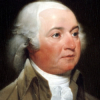
John Adams
John Adamswas an American lawyer, author, statesman, and diplomat. He served as the second President of the United States, the first Vice President, and as a Founding Father was a leader of American independence from Great Britain. Adams was a political theorist in the Age of Enlightenment who promoted republicanism and a strong central government. His innovative ideas were frequently published. He was also a dedicated diarist and correspondent, particularly with his wife and key advisor Abigail...
NationalityAmerican
ProfessionPresident
Date of Birth30 October 1735
CountryUnited States of America
There is not an enemy so stout, as to storm and take the fortress of the mind, Unless its infirmity turn traitor, and Fear unbar the gates.
Property must be secured or liberty cannot exist. But if unlimited or unbalanced power of disposing property, be put into the hands of those who have no property, France will find, as we have found, the lamb committed to the custody of the world. In such a case, all the pathetic exhortations and addresses of the national assembly to the people, to respect property, will be regarded no more than the warbles of the songsters of the forest.
The truth is that neither then nor at any former time, since I had attained my maturity in Age, Reading and reflection had I imbibed any general Prejudice against Kings, or in favour of them. It appeared to me then as it has done ever since, that there is a State of Society in which a Republican Government is the best, and in America the only one...
Tacitus appears to have been as great an enthusiast as Petrarch for the revival of the republic and universal empire. He has exerted the vengeance of history upon the emperors, but has veiled the conspiracies against them, and the incorrigible corruption of the people which probably provoked their most atrocious cruelties. Tyranny can scarcely be practised upon a virtuous and wise people.
We may... affirm that the balance of power in a society accompanies the balance of property in land. The only possible way, then, of preserving the balance of power on the side of liberty and public virtue is to make the acquisition of land easy to every member of society; to make a division of the land into small quantities, so that the multitude may be possessed of landed estates.
I do not say that democracy has been more pernicious on the whole, and in the long run, than monarchy or aristocracy. Democracy has never been and never can be so durable as aristocracy or monarchy; but while it lasts, it is more bloody than either.
Tis impossible to judge with much Præcision of the true Motives and Qualities of human Actions, or of the Propriety of Rules contrived to govern them, without considering with like Attention, all the Passions, Appetites, Affections in Nature from which they flow. An intimate Knowledge therefore of the intellectual and moral World is the sole foundation on which a stable structure of Knowledge can be erected.
If the empire of superstition and hypocrisy should be overthrown, happy indeed will it be for the world; but if all religion and morality should be over-thrown with it, what advantage will be gained?
Property is surely a right of mankind as real as liberty. Perhaps, at first, prejudice, habit, shame or fear, principle or religion, would restrain the poor from attacking the rich, and the idle from usurping on the industrious; but the time would not be long before courage and enterprise would come, and pretexts be invented by degrees, to countenance the majority in dividing all the property among them, or at least, in sharing it equally with its present possessors.
I am for making of terms annual, and for sending an entire new set every year.
If "Thou shalt not covet," and "Thou shalt not steal," were not commandments of Heaven, they must be made inviolable precepts in every society, before it can be civilized or made free.
Neither my father or mother, grandfather or grandmother, great grandfather or great grandmother, nor any other relation that I know of, or care a farthing for, has been in England these one hundred and fifty years; so that you see I have not one drop of blood in my veins but what is American.
There is something very unnatural and odious in a government a thousand leagues off. A whole government of our own choice, managed by persons whom we love, revere, and can confide in, has charms in it for which men will fight.
When we say God is a spirit, we know what we mean, as well as we do when we say that the pyramids of Egypt are matter. Let us be content, therefore, to believe him to be a spirit, that is, an essence that we know nothing of, in which originally and necessarily reside all energy, all power, all capacity, all activity, all wisdom, all goodness.