John Adams
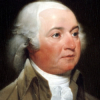
John Adams
John Adamswas an American lawyer, author, statesman, and diplomat. He served as the second President of the United States, the first Vice President, and as a Founding Father was a leader of American independence from Great Britain. Adams was a political theorist in the Age of Enlightenment who promoted republicanism and a strong central government. His innovative ideas were frequently published. He was also a dedicated diarist and correspondent, particularly with his wife and key advisor Abigail...
NationalityAmerican
ProfessionPresident
Date of Birth30 October 1735
CountryUnited States of America
A single assembly is liable to all the vices, follies, and frailties of an individual; subject to fits of humor, starts of passion, flights of enthusiasm, partialities, or prejudice, and consequently productive of hasty results and absurd judgments. And all these errors ought to be corrected and defects supplied by some controlling power.
As the government of the United States is not, in any sense, founded on the Christian religion; as it has in itself no character of enmity against the laws, religion or tranquility of Musselmen [Muslims] ... it is declared ... that no pretext arising from religious opinion shall ever product an interruption of the harmony existing between the two countries.... The United States is not a Christian nation any more than it is a Jewish or a Mohammedan nation.
If there is a form of government, then, whose principle and foundation is virtue, will not every sober man acknowledge it better calculated to promote the general happiness than any other form?
Fear is the foundation of most governments; but it is so sordid and brutal a passion, and renders men in whose breasts it predominates so stupid and miserable, that Americans will not be likely to approve of any political institution which is founded on it.
Government is instituted for the common good; for the protection, safety, prosperity, and happiness of the people; and not for profit, honor, or private interest of any one man, family, or class of men; therefore, the people alone have an incontestable, unalienable, and indefeasible right to institute government; and to reform, alter, or totally change the same, when their protection, safety, prosperity, and happiness require it.
We must not then depend alone upon the love of liberty in the soul of man for its preservation.
It has ever been my hobby-horse to see rising in America an empire of liberty, and a prospect of two or three hundred millions of freemen, without one noble or one king among them. You say it is impossible. If I should agree with you in this, I would still say, let us try the experiment, and preserve our equality as long as we can. A better system of education for the common people might preserve them long from such artificial inequalities as are prejudicial to society, by confounding the natural distinctions of right and wrong, virtue and vice.
The proposition that the people are the best keepers of their own liberties is not true. They are the worst conceivable, they are no keepers at all; they can neither judge, act, think, or will, as a political body.
[A] republic . . . [is] a government, in which the property of the public, or people, and of every one of them was secure and protected by law . . . implies liberty; because property cannot be secured unless the man be at liberty to acquire, use or part with it, at his discretion, and unless he have his personal liberty of life and limb, motion and rest, for that purpose.
Men must be ready, they must pride themselves and be happy to sacrifice their private pleasures, passions and interests, nay, their private friendships and dearest connections, when they stand in competition with the rights of society.
It already appears, that there must be in every society of men superiors and inferiors, because God has laid in the constitution and course of nature the foundations of the distinction.
We shall, by and by, want a world of hemp more for our own consumption.
Thomas Jefferson survives.
What other form of government, indeed, can so well deserve our esteem and love?