John Adams
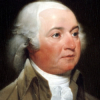
John Adams
John Adamswas an American lawyer, author, statesman, and diplomat. He served as the second President of the United States, the first Vice President, and as a Founding Father was a leader of American independence from Great Britain. Adams was a political theorist in the Age of Enlightenment who promoted republicanism and a strong central government. His innovative ideas were frequently published. He was also a dedicated diarist and correspondent, particularly with his wife and key advisor Abigail...
NationalityAmerican
ProfessionPresident
Date of Birth30 October 1735
CountryUnited States of America
As unbalanced parties of every description can never tolerate a free inquiry of any kind, when employed against themselves, the license, and even the most temperate freedom of the press, soon excite resentment and revenge.
We electors have an important constitutional power placed in our hands: we have a check upon two branches of the legislature, as each branch has upon the other two; the power I mean of electing at stated periods, one branch, which branch has the power of electing another. It becomes necessary to every subject then, to be in some degree a statesman: and to examine and judge for himself of the tendencies of political principles and measures.
The law no passion can disturb. 'Tis void of desire and fear, lust and anger. 'Tis mens sine affectu, written reason, retaining some measure of the divine perfection. It does not enjoin that which pleases a weak, frail man, but, without any regard to persons, commands that which is good and punishes evil in all, whether rich or poor, high or low.
The moment the idea is admitted into society that property is not as sacred as the law of God, and that there is not a force of law and public justice to protect it, anarchy and tyranny commence.
Let them revere nothing but religion, morality and liberty.
[You have Rights] antecedent to all earthly governments: Rights, that cannot be repealed or restrained by human laws; Rights, derived from the Great Legislator of the universe.
Were I to define the British constitution, therefore, I should say, it is a limited monarchy, or a mixture of the three forms of government commonly known in the schools, reserving as much of the monarchical splendor, the aristocratical independency, and the democratical freedom, as are necessary that each of these powers may have a control, both in legislation and execution, over the other two, for the preservation of the subject's liberty.
Liberty can no more exist without virtue and independence than the body can live and move without a soul.
Public virtue cannot exist in a nation without private, and public virtue is the only foundation of republics.
[I]t is religion and morality alone which can establish the principles upon which freedom can securely stand. The only foundation of a free constitution is pure virtue.
Honor is truly sacred, but holds a lower rank in the scale of moral excellence than virtue. Indeed the former is part of the latter, and consequently has not equal pretensions to support a frame of government productive of human happiness.
Mankind will in time discover that unbridled majorities are as tyrannical and cruel as unlimited despots.
Every measure of prudence, therefore, ought to be assumed for the eventual total extirpation of slavery from the United States ... I have, throughout my whole life, held the practice of slavery in ... abhorrence.
Negro slavery is an evil of colossal magnitude.