John Adams
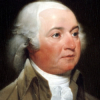
John Adams
John Adamswas an American lawyer, author, statesman, and diplomat. He served as the second President of the United States, the first Vice President, and as a Founding Father was a leader of American independence from Great Britain. Adams was a political theorist in the Age of Enlightenment who promoted republicanism and a strong central government. His innovative ideas were frequently published. He was also a dedicated diarist and correspondent, particularly with his wife and key advisor Abigail...
NationalityAmerican
ProfessionPresident
Date of Birth30 October 1735
CountryUnited States of America
Where annual elections end, there slavery begins ... Humility, patience, and moderation, without which every man in power becomes a ravenous beast of prey.
No truth is more clearly taught in the Volume of Inspiration, nor any more fully demonstrated by the experience of all ages, than that a deep sense and a due acknowledgment of the governing providence of a Supreme Being and the accountableness of men to Him as the searcher of hearts and righteous distributor of rewards and punishments are conducive equally to the happiness and rectitude of individuals and to the well being of communities.
Since natural law was thought to be accessible to the ordinary man, the theory invited each juror to inquire for himself whether a particular rule of law was consonant with principles of higher law. This view is reflected in John Adams' statement that it would be an 'absurdity' for jurors to be required to accept the judge's view of the law, 'against their own opinion, judgment, and conscience.'
The study and practice of law ... does not dissolve the obligations of morality or of religion.
The United States of America have exhibited, perhaps, the first example of governments erected on the simple principles of nature. . . . [In] the formation of the American governments . . . it will never be pretended that any persons employed in that service had interviews with the gods, or were in any degree under the influence of heaven. . . . These governments were contrived merely by the use of reason and the senses.
Mr. Jefferson has reason to reflect upon himself. How he will get rid of his remorse in his retirement, I know not. He must know that he leaves the government infinitely worse than he found it, and that from his own error or ignorance.
A single assembly will never be a steady guardian of the laws, if Machiavel is right, when he says, Men are never good but through necessity: on the contrary, when good and evil are left to their choice, they will not fail to throw every thing into disorder and confusion. Hunger and poverty may make men industrious, but laws only can make them good; for, if men were so of themselves, there would be no occasion for laws; but, as the case is far otherwise, they are absolutely necessary.
Major Greene this evening fell into some conversation with me about the Divinity and satisfaction of Jesus Christ. All the argument he advanced was, "that a mere creature or finite being could not make satisfaction to infinite justice for any crimes," and that "these things are very mysterious." Thus mystery is made a convenient cover for absurdity.
Swim or sink, live or die, survive or perish with my country was my unalterable determination.
[I] never understood [what a republican government was and] I believe no other man ever did or ever will.
Each individual of the society has a right to be protected by it in the enjoyment of his life, liberty, and property, according to standing laws.
If Aristotle, Livy, and Harrington knew what a republic was, the British constitution is much more like a republic than an empire. They define a republic to be a government of laws, and not of men. If this definition is just, the British constitution is nothing more or less than a republic, in which the king is first magistrate. This office being hereditary, and being possessed of such ample and splendid prerogatives, is no objection to the government's being a republic, as long as it is bound by fixed laws, which the people have a voice in making, and a right to defend.
You are apprehensive of monarchy; I, of aristocracy. I would therefore have given more power to the President and less to the Senate.
The idea of infidelity [a disbelief in the inspiration of the Scriptures or the divine origin of Christianity] cannot be treated with too much resentment or too much horror. The man who can think of it with patience is a traitor in his heart and ought to be execrated [denounced] as one who adds the deepest hypocrisy to the blackest treason.