John Locke
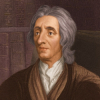
John Locke
John Locke FRSwas an English philosopher and physician, widely regarded as one of the most influential of Enlightenment thinkers and commonly known as the "Father of Liberalism". Considered one of the first of the British empiricists, following the tradition of Sir Francis Bacon, he is equally important to social contract theory. His work greatly affected the development of epistemology and political philosophy. His writings influenced Voltaire and Rousseau, many Scottish Enlightenment thinkers, as well as the American revolutionaries. His contributions...
NationalityEnglish
ProfessionPhilosopher
Date of Birth29 August 1632
No man's knowledge here can go beyond experience. (An Essay concerning Human Understanding.)
The only fence against the world is a thorough knowledge of it, into which a young gentleman should be enter'd by degrees, as he can bear it; and the earlier the better, so he be in safe and skillful hands to guide him.
Vague and mysterious forms of speech, and abuse of language, have so long passed for mysteries of science; and hard or misapplied words with little or no meaning have, by prescription, such a right to be mistaken for deep learning and height of speculation, that it will not be easy to persuade either those who speak or those who hear them, that they are but the covers of ignorance and hindrance of true knowledge.
Let us suppose the mind to be, as we say, white paper, void of all characters, without any ideas; how comes it to be furnished? Whence comes it by that vast store which the busy and boundless fancy of man has painted on it with an almost endless variety? Whence has it all the materials of reason and knowledge? To this I answer, in one word, from experience.
No man's knowledge here can go beyond his experience.
The improvement of understanding is for two ends: first, our own increase of knowledge; secondly, to enable us to deliver that knowledge to others.
Logic is the anatomy of thought.
Our Savior's great rule, that we should love our neighbors as ourselves, is such a fundamental truth for the regulating of human society, that, by that alone, one might without difficulty determine all the cases and doubts in social morality.
We just want to show the people of this town what the benefits are.
There being nothing more evident than that creatures of the same species should be equal amongst one another without subordination or subjection
Man... hath by nature a power .... to preserve his property - that is, his life, liberty, and estate - against the injuries and attempts of other men.
Nature never makes excellent things for mean or no uses.
Reading furnishes the mind only with material for knowledge; it is thinking that makes what we read ours.
If punishment makes not the will supple it hardens the offender