John Ruskin
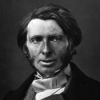
John Ruskin
John Ruskinwas the leading English art critic of the Victorian era, also an art patron, draughtsman, watercolourist, a prominent social thinker and philanthropist. He wrote on subjects as varied as geology, architecture, myth, ornithology, literature, education, botany and political economy. His writing styles and literary forms were equally varied. Ruskin penned essays and treatises, poetry and lectures, travel guides and manuals, letters and even a fairy tale. The elaborate style that characterised his earliest writing on art was later superseded...
NationalityEnglish
ProfessionWriter
Date of Birth8 February 1819
God is a kind Father. He sets us all in the places where he wishes us to be employed. He chooses work for every creature which will be delightful to them if they do it simply and humbly. He gives us always strength enough and sense enough for what he wants us to do.
Anything which elevates the mind is sublime. Greatness of matter, space, power, virtue or beauty, are all sublime.
Superstition, in all times and among all nations, is the fear of a spirit whose passions are those of a man, whose acts are the acts of a man; who is present in some places, not in others; who makes no places holy and not others; who is kind to one person, unkind to another; who is pleased or angry according to the degree of attention you pay him, or praise you refuse to him; who is hostile generally to human pleasure, but may be bribed by sacrifice of a part of that pleasure into permitting the rest. This, whatever form of faith it colors, is the essence of superstition.
Our purity of taste is best tested by its universality, for if we can only admire this thing or that, we maybe use that our cause for liking is of a finite and false nature.
Absolute ugliness is admitted as rarely as perfect beauty; but degrees of it more or less distinct are associated with whatever has the nature of death and sin, just as beauty is associated with what has the nature of virtue and of life.
Such help as we can give to each other in this world is a debt to each other; and the man who perceives a superiority or a capacity in a subordinate, and neither confesses nor assists it, is not merely the withholder of kindness, but the committer of injury.
If you want to work for the kingdom of God, and to bring it, and enter into it, there is just one condition to be first accepted. You must enter into it as children, or not at all.
In painting as in eloquence, the greater your strength, the quieter your manner.
All true opinions are living, and show their life by being capable of nourishment; therefore of change. But their change is that of a tree not of a cloud.
Architecture concerns itself only with those characters of an edifice which are above and beyond its common use.
Commerce is the agency by which the power of choice is obtained.
The word "Blue" does not mean the sensation caused by a gentian on the human eye; but it means the power of producing that sensation: and this power is always there, in the thing, whether we are there to experience it or not, and would remain there though there were not a man left on the face of the earth.
How false is the conception, how frantic the pursuit, of that treacherous phantom which men call Liberty.
No small misery is caused by overworked and unhappy people, in the dark views which they necessarily take up themselves, and force upon others, of work itself.