John Ruskin
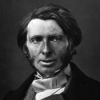
John Ruskin
John Ruskinwas the leading English art critic of the Victorian era, also an art patron, draughtsman, watercolourist, a prominent social thinker and philanthropist. He wrote on subjects as varied as geology, architecture, myth, ornithology, literature, education, botany and political economy. His writing styles and literary forms were equally varied. Ruskin penned essays and treatises, poetry and lectures, travel guides and manuals, letters and even a fairy tale. The elaborate style that characterised his earliest writing on art was later superseded...
NationalityEnglish
ProfessionWriter
Date of Birth8 February 1819
An unimaginative person can neither be reverent or kind.
It is a good and safe rule to sojourn in every place as if you meant to spend your life there, never omitting an opportunity of doing a kindness, or speaking a true word, or making a friend.
Such help as we can give to each other in this world is a debt to each other; and the man who perceives a superiority or a capacity in a subordinate, and neither confesses nor assists it, is not merely the withholder of kindness, but the committer of injury.
A little thought and a little kindness are often worth more than a great deal of money.
It is not, truly speaking, the labor that is divided; but the men: divided into mere segments of men --broken into small fragments and crumbs of life, so that all the little piece of intelligence that is left in a man is not enough to make a pin, or a nail, but exhausts itself in making the point of a pin or the head of a nail.
It is only by labor that thought can be made healthy, and only by thought that labor can be made happy; and the two cannot be separated with impunity
Out of suffering comes the serious mind; out of salvation, the grateful heart; out of endurance, fortitude; out of deliverance faith.
Tell me what you like and I'll tell you what you are.
All books are divisible into two classes, the books of the hour, and the books of all time.
To see clearly is poetry, prophecy and religion all in one.
When we build, let us think that we build for ever.
A man is one whose body has been trained to be the ready servant of his mind; whose passions are trained to be the servants of his will; who enjoys the beautiful, loves truth, hates wrong, loves to do good, and respects others as himself.
The persons who remain poor are the entirely foolish, the entirely wise, the idle, the reckless, the humble, the thoughtful, the dull, the imaginative, the sensitive, the well-informed, the improvident, the irregularly and impulsively wicked, the clu
Hundreds can talk to one who can think; thousands can think to one who can see