John Ruskin
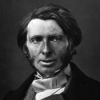
John Ruskin
John Ruskinwas the leading English art critic of the Victorian era, also an art patron, draughtsman, watercolourist, a prominent social thinker and philanthropist. He wrote on subjects as varied as geology, architecture, myth, ornithology, literature, education, botany and political economy. His writing styles and literary forms were equally varied. Ruskin penned essays and treatises, poetry and lectures, travel guides and manuals, letters and even a fairy tale. The elaborate style that characterised his earliest writing on art was later superseded...
NationalityEnglish
ProfessionWriter
Date of Birth8 February 1819
A man is one whose body has been trained to be the ready servant of his mind; whose passions are trained to be the servants of his will; who enjoys the beautiful, loves truth, hates wrong, loves to do good, and respects others as himself.
You might sooner get lightning out of incense smoke than true action or passion out of your modern English religion.
Mountains are to the rest of the body of the earth, what violent muscular action is to the body of man. The muscles and tendons of its anatomy are, in the mountain, brought out with force and convulsive energy, full of expression, passion, and strength.
We have seen when the earth had to be prepared for the habitation of man, a veil, as it were, of intermediate being was spread between him and its darkness, in which were joined in a subdued measure, the stability and insensibility of the earth, and the passion and perishing of mankind.
All other passions do occasional good; but when pride puts in its word everything goes wrong.
It is strange that of all the pieces of the Bible which my mother taught me, that which cost me the most to learn, and which was to my childish mind the most repulsive - Psalm 119 - has now become of all the most precious to me in its overflowing and glorious passion of love for the Law of God.
Superstition, in all times and among all nations, is the fear of a spirit whose passions are those of a man, whose acts are the acts of a man; who is present in some places, not in others; who makes no places holy and not others; who is kind to one person, unkind to another; who is pleased or angry according to the degree of attention you pay him, or praise you refuse to him; who is hostile generally to human pleasure, but may be bribed by sacrifice of a part of that pleasure into permitting the rest. This, whatever form of faith it colors, is the essence of superstition.
Skill is the unified force of experience, intellect and passion in their operation.
It is not, truly speaking, the labor that is divided; but the men: divided into mere segments of men --broken into small fragments and crumbs of life, so that all the little piece of intelligence that is left in a man is not enough to make a pin, or a nail, but exhausts itself in making the point of a pin or the head of a nail.
It is only by labor that thought can be made healthy, and only by thought that labor can be made happy; and the two cannot be separated with impunity
Out of suffering comes the serious mind; out of salvation, the grateful heart; out of endurance, fortitude; out of deliverance faith.
Tell me what you like and I'll tell you what you are.
All books are divisible into two classes, the books of the hour, and the books of all time.
An unimaginative person can neither be reverent or kind.