John Stuart Mill
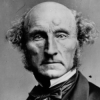
John Stuart Mill
John Stuart Millwas an English philosopher, political economist, feminist, and civil servant. One of the most influential thinkers in the history of liberalism, he contributed widely to social theory, political theory and political economy. He has been called "the most influential English-speaking philosopher of the nineteenth century." Mill's conception of liberty justified the freedom of the individual in opposition to unlimited state control...
NationalityEnglish
ProfessionPhilosopher
Date of Birth20 May 1806
vanity quality purpose
When a thing is bought not for its use but for its costliness, cheapness is no recommendation. As Sismondi remarks, the consequence of cheapening articles of vanity, is not that less is expended on such things, but that the buyers substitute for the cheapened article some other which is more costly, or a more elaborate quality of the same thing; and as the inferior quality answered the purpose of vanity equally well when it was equally expensive, a tax on the article is really paid by nobody: it is a creation of public revenue by which nobody loses.
father atheism taught
My father taught me that the question Who made me? cannot be answered, since it immediately suggests the further question, Who made God?
mind study conclusion
As often as a study is cultivated by narrow minds, they will draw from it narrow conclusions.
atheism development enabling
Belief, thus, in the supernatural, great as are the services which it rendered in the early stages of human development, cannot be considered to be any longer required, either for enabling us to know what is right and wrong in social morality, or for supplying us with motives to do right and to abstain from wrong.
believe views atheism
He must be able to hear them [the counter arguments] from persons who actually believe them; who defend them in earnest, and do their very utmost for them. He must know them in their most plausible and persuasive form; he must feel the whole force of the difficulty which the true view of the subject has to encounter and dispose of; else he will never really possess himself of the portion of truth which meets and removes that difficulty.
work wages branches
The bad workmen who form the majority of the operatives in many branches of industry are decidedly of opinion that bad workmen ought to receive the same wages as good.
real evil morality
There is a very real evil consequent on ascribing supernatural origin to the received maxilms of morality. That origin consecrates the whole of them and protects them from being discussed or criticized.
despotism asks customs
The despotism of custom is on the wane. We are not content to know that things are; we ask whether they ought to be.
exercise mind taught
A cultivated mind is one to which the fountains of knowledge have been opened, and which has been taught, in any tolerable degree, to exercise its faculties.
men feet people
A people may prefer a free government, but if by momentary discouragement or temporary panic, or a fit of enthusiasm for an individual, they can be induced to lay their liberties at the feet of even a great man, or trust him with powers to subvert their institutions, in all these cases they are unfit for liberty.
ideas ability
When one's ideas are not challenged, one's ability to defend them weakens.
opposites may littles
He who knows only his own side of the case (argument) knows little of that. His reasons may be good, and no one may have been able to refute them. But if he is equally unable to refute the reasons on the opposite side, if he does not so much as know what they are, he has no ground for preferring either opinion
strong may opinion
However unwillingly a person who has a strong opinion may admit the possibility that his opinion may be false, he ought to be moved by the consideration that, however true it may be, if it is not fully, frequently, and fearlessly discussed, it will be held as a dead dogma, not a living truth.
long support population
If the earth must lose that great portion of its pleasantness which it owes to things that the unlimited increase of wealth and population would extirpate from it, for the mere purpose of enabling it to support a larger, but not a happier or a better population, I sincerely hope, for the sake of posterity, that they will be content to be stationary, long before necessity compels them to it.