John Stuart Mill
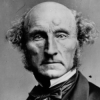
John Stuart Mill
John Stuart Millwas an English philosopher, political economist, feminist, and civil servant. One of the most influential thinkers in the history of liberalism, he contributed widely to social theory, political theory and political economy. He has been called "the most influential English-speaking philosopher of the nineteenth century." Mill's conception of liberty justified the freedom of the individual in opposition to unlimited state control...
NationalityEnglish
ProfessionPhilosopher
Date of Birth20 May 1806
philosophical character science
The doctrine called Philosophical Necessity is simply this: that, given the motives which are present to an individual's mind, and given likewise the character and disposition of the individual, the manner in which he will act might be unerringly inferred: that if we knew the person thoroughly, and knew all the inducements which are acting upon him, we could foretell his conduct with as much certainty as we can predict any physical event.
country giving desire
What a country wants to make it richer is never consumption, but production. Where there is the latter, we may be sure that there is no want of the former. To produce, implies that the producer de_sires to consume; why else should he give himself useless labor? He may not wish to consume what he himself produces, but his motive for producing and selling is the desire to buy. Therefore, if the producers generally produce and sell more and more, they certainly also buy more and more.
responsibility feelings creation
The feeling of a direct responsibility of the individual to God is almost wholly a creation of Protestantism.
country ambition hard-work
The opening of a foreign trade, by making them acquainted with new objects, or tempting them by the easier acquisition of things which they had not previously thought attainable, sometimes works a sort of industrial revolution in a country whose resources were previously undeveloped for want of energy and ambition in the people: inducing those who were satisfied with scanty comforts and little work, to work harder for the gratification of their new tastes, and even to save, and accumulate capital, for the still more complete satisfaction of those tastes at a future time.
class ideas long
The English, of all ranks and classes, are at bottom, in all their feelings, aristocrats. They have some concept of liberty, and set some value on it, but the very idea of equality is strange and offensive to them. They do not dislike to have many people above them as long as they have some below them.
science two causes
If two or more instances of the phenomenon under investigation have only one circumstance in common, the circumstance in which alone all the instances agree is the cause (or effect) of the given phenomenon.
practice civilization people
Co-operation, like other difficult things, can be learned only by practice: and to be capable of it in great things, a people must be gradually trained to it in small. Now the whole course of advancing civilization is a series of such training.
taken science being-real
The cause, then, philosophically speaking, is the sum total of the conditions, positive and negative, taken together; the whole of the contingencies of every description, which being realized, the consequent invariably follows.
past islands sea
Human existence is girt round with mystery: the narrow region of our experience is a small island in the midst of a boundless sea. To add to the mystery, the domain of our earthly existence is not only an island of infinite space, but also in infinite time. The past and the future are alike shrouded from us: we neither know the origin of anything which is, nor its final destination.
education science numbers
Of all many-sided subjects, [education] is the one which has the greatest number of sides.
ideas feelings together
The idea is essentially repulsive, of a society held together only by the relations and feelings arising out of pecuniary interest.
dream majority speak
The great majority of those who speak of perfectibility as a dream, do so because they feel that it is one which would afford them no pleasure if it were realized.
mean science ideas
This is what writers mean when they say that the notion of cause involves the idea of necessity. If there be any meaning which confessedly belongs to the term necessity, it is unconditionalness. That which is necessary, that which must be, means that which will be, whatever supposition we may make in regard to all other things.
political age knees
In this age, the mere example of nonconformity, the mere refusal to bend the knee to custom, is itself a service.