John Stuart Mill
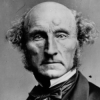
John Stuart Mill
John Stuart Millwas an English philosopher, political economist, feminist, and civil servant. One of the most influential thinkers in the history of liberalism, he contributed widely to social theory, political theory and political economy. He has been called "the most influential English-speaking philosopher of the nineteenth century." Mill's conception of liberty justified the freedom of the individual in opposition to unlimited state control...
NationalityEnglish
ProfessionPhilosopher
Date of Birth20 May 1806
silence may opinion
if any opinion is compelled to silence, that opinion may, for aught we can certainly know, be true. To deny this is to assume our own infallibility.
communication progress action
It's hardly possible to overstate the value, in the present state of human improvement, of placing human beings in contact with other persons dissimilar to themselves, and with modes of thought and action unlike those with which they are familiar. Such communication has always been... one of the primary sources of progress.
government school-education education-and-freedom
A general State education is a mere contrivance for moulding people to be exactly like one another, and as the mould in which it casts them is that which pleases the dominant power in the government.
knowing faults degrees
Most persons have but a very moderate capacity of happiness. Expecting...in marriage a far greater degree of happiness than they commonly find, and knowing not that the fault is in their own scanty capability of happiness.
sex age males
In early times, the great majority of the male sex were slaves, as well as the whole of the female. And many ages elapsed, some of them ages of high cultivation, before any thinker was bold enough to question the rightfulness, and the absolute social necessity, either of the one slavery or of the other.
growing-up pain father
Most boys or youths who have had much knowledge drilled into them, have their mental capacities not strengthened, but overlaid by it. They are crammed with mere facts, and with the opinions and phrases of other people, and these are accepted as a substitute for the power to form opinions of their own. And thus, the sons of eminent fathers, who have spared no pains in their education, so often grow up mere parroters of what they have learnt, incapable of using their minds except in the furrows traced for them.
two giving feelings
Of two pleasures, if there be one which all or almost all who have experience of both give a decided preference, irrespective of any feeling of moral obligation to prefer it, that is the more desirable pleasure.
heart mind may
All acts suppose certain dispositions, and habits of mind and heart, which may be in themselves states of enjoyment or of wretchedness, and which must be fruitful in other consequences besides those particular acts.
average people population
The average condition of the people improving or deteriorating, depends upon whether population is advancing faster than improvement, or improvement than population.
people desire produce
The sole evidence it is possible to produce that anything is desirable, is that people do actually desire it.
punishment giving criminals
Since the state must necessarily provide subsistence for the criminal poor while undergoing punishment, not to do the same for the poor who have not offended is to give a premium on crime.
practice atheism needs
There is always need of persons not only to discover new truths, and point out when what were once truths are true no longer, but also to commence new practices, and set the example of more enlightened conduct, and better taste and sense in human life.
freedom mind sovereign
Over one's mind and over one's body the individual is sovereign.
success time work
That so few now dare to be eccentric, marks the chief danger of the time.