John Stuart Mill
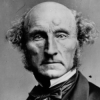
John Stuart Mill
John Stuart Millwas an English philosopher, political economist, feminist, and civil servant. One of the most influential thinkers in the history of liberalism, he contributed widely to social theory, political theory and political economy. He has been called "the most influential English-speaking philosopher of the nineteenth century." Mill's conception of liberty justified the freedom of the individual in opposition to unlimited state control...
NationalityEnglish
ProfessionPhilosopher
Date of Birth20 May 1806
men experience faculty
With equality of experience and of general faculties, a woman usually sees much more than a man of what is immediately before her.
justice words-of-wisdom taxation
...it is not only the general principles of justice that are infringed, or at least set aside, by the exclusion of women, merely as women, from any share in the representation; that exclusion is also repugnant to the particular principles of the British Constitution. It violates one of the oldest of our constitutional maxims...that taxation and representation should be co-extensive. Do not women pay taxes?
truth errors people
Not the violent conflict between parts of the truth, but the quiet suppression of half of it, is the formidable evil; there is always hope when people are forced to listen to both sides; it is when they attend to only one that errors harden into prejudices, and truth itself ceases to have the effect of truth, by being exaggerated into falsehood.
horse land agriculture
When the land is cultivated entirely by the spade and no horses are kept, a cow is kept for every three acres of land.
believe struggle law
No longer enslaved or made dependent by force of law, the great majority are so by force of property; they are still chained to a place, to an occupation, and to conformity with the will of an employer, and debarred by the accident of birth to both the enjoyments, and from the mental and moral advantages, which others inherit without exertion and independently of desert. That this is an evil equal to almost any of those against which mankind have hitherto struggles, the poor are not wrong in believing.
men ideas curiosity
A man of clear ideas errs grievously if he imagines that whatever is seen confusedly does not exist; it belongs to him, when he meets with such a thing, to dispel the midst, and fix the outlines of the vague form which is looming through it.
men creative individuality
The great creative individual . . . is capable of more wisdom and virtue than collective man ever can be.
thinking government ninety-nine
To think that because those who wield power in society wield in the end that of government, therefore it is of no use to attempt to influence the constitution of the government by acting on opinion, is to forget that opinion is itself one of the greatest active social forces. One person with a belief is a social power equal to ninety-nine who have only interests.
government office watches
Instead of the function of governing, for which it is radically unfit, the proper office of a representative assembly is to watch and control the government.
return benefits protection
Everyone who receives the protection of society owes a return for the benefit.
ideas effort age
It often happens that the universal belief of one age, a belief from which no one was free or could be free without an extraordinary effort of genius or courage, becomes to a subsequent age, so palpable an absurdity, that the only difficulty is to imagine how such an idea could ever have appeared credible.
giving perception enemy
Lord, enlighten thou our enemies. Sharpen their wits, give acuteness to their perceptions, and consecutiveness and clearness to their reasoning powers: we are in danger from their folly, not from their wisdom; their weakness is what fills us with apprehension, not their strength.
marriage law house
Marriage is the only actual bondage known to our law. There remain no legal slaves, except the mistress of every house.
government hands class
The natural tendency of representative government, as of modern civilisation, is towards collective mediocrity: and this tendency is increased by all reductions and extensions of the franchise, their effect being to place the principal power in the hands of classes more and more below the highest level of instruction in the community.