Kenneth Clark
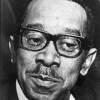
Kenneth Clark
Kenneth McKenzie Clark, Baron Clark OM CH KCB FBAwas a British author, museum director, broadcaster, and one of the best-known art historians and aesthetes of his generation, writing a series of books that appealed to a wide public, while remaining a serious scholar. In 1969, he achieved international fame as the writer, producer and presenter of the BBC Television series Civilisation, which pioneered television documentary series combining expert personalized narration with lavish photography on location...
NationalityBritish
ProfessionNovelist
Date of Birth13 July 1903
It would be unfair to say that I prefer the back of a book to its contents, but it is true that the sight of a lot of books gives me the hope that I may some day read them, which sometimes develops into the belief that I have read them.
People sometimes tell me that they prefer barbarism to civilisation. I doubt if they have given it a long enough trial. Like the people of Alexandria, they are bored by civilisation; but all the evidence suggests that the boredom of barbarism is infinitely greater.
The nude does not simply represent the body, but relates it, by analogy, to all structures that have become part of our imaginative experience.
All color is no color.
Fine colour implies a unified relationship, in which each part is subordinate to the whole, and the transitions between them are felt to be as precious and beautiful as the colours themselves. In fact, the colours themselves must be continuously modified and broken as part of the transition.
Devotion to the facts will always give the pleasures of recognition; adherence to the rules of design, the pleasures of order and certainty.
Almost all great painters in old age arrive at the same kind of broad, simplified style, as if they wanted to summarise the whole of their experience in a few strokes and blobs of colour.
The nude gains its enduring value from the fact that it reconciles several contrary states. It takes the most sensual and immediately interesting object, the human body, and puts it out of reach of time and desire; it takes the most purely rational concept of which mankind is capable, mathematical order, and makes it a delight to the senses; and it takes the vague fears of the unknown and sweetens them by showing that the gods are like men and may be worshiped for their life-giving beauty rather than their death-dealing powers.
Conventional nudes based on classical originals could bear no burden of thought or inner life without losing their formal completeness.
Heroes do not easily tolerate the company of other heroes.
Sweeping, confident articles on the future seem to me, intellectually, the most disreputable of all forms of public utterance.
One musn't overrate the culture of what used to be called "top people" before the wars. They had charming manners, but they were as ignorant as swans.
However much the various phases of the French Revolution may have modelled themselves on Roman history the early phase on Republican virtue, the later on Imperial grandeur the fact remains that classicism depended on a fixed and rational philosophy; whereas the spirit of the Revolution was one of change and of emotion.
This became Delacroix 's theme: that the achievements of the spirit all that a great library contained were the result of a state of society so delicately balanced that at the least touch they would be crushed beneath an avalanche of pent-up animal forces.