Kenneth Clark
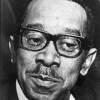
Kenneth Clark
Kenneth McKenzie Clark, Baron Clark OM CH KCB FBAwas a British author, museum director, broadcaster, and one of the best-known art historians and aesthetes of his generation, writing a series of books that appealed to a wide public, while remaining a serious scholar. In 1969, he achieved international fame as the writer, producer and presenter of the BBC Television series Civilisation, which pioneered television documentary series combining expert personalized narration with lavish photography on location...
NationalityBritish
ProfessionNovelist
Date of Birth13 July 1903
The illustrator is essentially a reporter: his subjects come from the outside, lit by a flash. A subject comes to the classical artist from inside, and when he discovers confirmation of it in the outside world he feels that it has been there all the time.
The difference between what we see and a sheet of white paper with a few thin lines on it is very great. Yet this abstraction is one which we seem to have adopted almost instinctively at an early stage in our development, not only in Neolithic graffiti but in early Egyptian drawings. And in spite of its abstract character, the outline is responsive to the least tremor of sensibility.
Only the bad artists of the nineteenth century were frightened by the invention of photography; the good ones all welcomed it and used it.
I believe that in spite of the recent triumphs of science, men haven't changed much in the last two thousand years; and in consequence we must still try to learn from history. History is ourselves.
You have no idea what portrait painters suffer from the vanity of their sitters.
I believe in the God-given genius of certain individuals, and I value a society that makes their existence possible.
Just as a classical dancer repeats the same movements again and again, in order to achieve a greater perfection of line and balance, so Degas repeats the same motifs - it was one of the things that gave him so much sympathy with dancers.
The eye instinctively looks for analogies and amplifies them, so that a face imagined in the pattern of a wallpaper may become more vivid than a photograph.
Evidently one cannot look for long at the Last Supper without ceasing to study it as a composition, and beginning to speak of it as a drama. It is the most literary of all great pictures, one of the few of which the effect may largely be conveyed - can even be enhanced - by description.
Over and above the political, economic, sociological, and international implications of racial prejudices, their major significance is that they place unnecessary burdens upon human beings.
Pride, like humility, is destroyed by one's insistence that he possesses it.
Children who are treated as if they are uneducable almost invariably become uneducable.
I believe in courtesy, the ritual by which we avoid hurting other people's feelings by satisfying our own egos.
A racist system inevitably destroys and damages human beings; it brutalizes and dehumanizes them, blacks and whites alike.