Marshall McLuhan
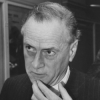
Marshall McLuhan
Herbert Marshall McLuhan, CCwas a Canadian professor, philosopher, and public intellectual. His work is viewed as one of the cornerstones of the study of media theory, as well as having practical applications in the advertising and television industries. He was educated at the University of Manitoba and Cambridge University and began his teaching career as a Professor of English at several universities in the U.S. and Canada, before moving to the University of Toronto where he would remain for the...
NationalityCanadian
ProfessionNovelist
Date of Birth21 July 1911
CityEdmonton, Canada
CountryCanada
There is a real, living unity in our time, as in any other, but it lies submerged under a superficial hubbub of sensation.
Typography is not only a technology but is in itself a natural resource or staple, like cotton or timber or radio; and, like any staple, it shapes not only private sense ratios but also patterns of communal interdependence.
Human perception is literally incarnation.
The percept takes priority of the concept.
Poetry and the arts can’t exist in America. Mere exposure to the arts does nothing for a mentality which is incorrigibly dialectical. The vital tensions and nutritive action of ideogram remain inaccessible to this state of mind.
I expect to see the coming decades transform the planet into an art form; the new man, linked in a cosmic harmony that transcends time and space, will sensuously caress and mold and pattern every facet of the terrestrial artifact as if it were a work of art, and man himself will become an organic art form.
Today's child is bewildered when he enters the 19th century environment that still characterizes the educational establishment where information is scarce but ordered and structured by fragmented, classified patterns subjects, and schedules.
Once we have surrendered our senses and nervous systems to the private manipulation of those who would try to benefit from taking a lease on our eyes and ears and nerves, we don't really have any rights left. Leasing our eyes and ears and nerves to commercial interests is like handing over the common speech to a private corporation, or like giving the earth's atmosphere to a company as a monopoly.
Faced with information overload, we have no alternative but pattern-recognition.
Those conspiracies that are too incredible to be believed, are by the same right, those which most often succeed.
The products of modern science are not in themselves good or bad; it is the way they are used that determines their value.
The past went that-a-way. When faced with a totally new situation, we tend always to attach ourselves to the objects, to the flavor of the most recent past. We look at the present through a rear view mirror. We march backwards into the future.
Language as the technology of human extension, whose powers of division and separation we know so well, may have been the "Tower of Babel" by which men sought to scale the highest heavens. Today computers hold out the promise of a means of instant tr
Of the many unforeseen consequences of typography, the emergence of nationalism is, perhaps, the most familiar