Nhat Hanh
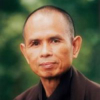
Nhat Hanh
Thích Nhất Hạnh; born as Nguyen Xuan Bao on October 11, 1926) is a Vietnamese Buddhist monk and peace activist. He lives in Plum Village in the Dordogne region in the south of France, travelling internationally to give retreats and talks. He coined the term "Engaged Buddhism" in his book Vietnam: Lotus in a Sea of Fire. A long-term exile, he was given permission to make his first return trip to Vietnam in 2005...
NationalityVietnamese
ProfessionActivist
Date of Birth11 October 1926
CountryVietnam
Meditation can help us embrace our worries, our fear, our anger; and that is very healing. We let our own natural capacity of healing do the work.
Working for peace in the future is to work for peace in the present moment.
The moment you understand the importance of loving yourself, you will stop hurting others.
Our own life has to be our message.
The wave does not need to die to become water. She is already water.
In every country in the world, killing human beings is condemned. The Buddhist precept of non-killing extends even further, to include all living beings.
When you produce peace and happiness in yourself, you begin to realize peace for the whole world. With the smile that you produce in yourself, with the conscious breathing you establish within yourself, you begin to work for peace in the world.
We can continue to learn generation after generation and now is time to begin to learn how to love in a non-discriminatory way because we are intelligent enough, but we are not loving enough as a species.
You know that your happiness and suffering depend on the happiness and suffering of others. That insight helps you not to do wrong things that will bring suffering to yourself and to other people.
It is possible to live happily in the here and the now. So many conditions of happiness are available - more than enough for you to be happy right now. You don't have to run into the future in order to get more.
When you learn about the teaching and the practice of another tradition, you always have a chance to understand your own teaching and practice.