Noam Chomsky
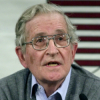
Noam Chomsky
Avram Noam Chomskyis an American linguist, philosopher, cognitive scientist, historian, logician, social critic, and political activist. Sometimes described as "the father of modern linguistics", Chomsky is also a major figure in analytic philosophy, and one of the founders of the field of cognitive science. He has spent more than half a century at the Massachusetts Institute of Technology, where he is Institute Professor Emeritus, and is the author of over 100 books on topics such as linguistics, war, politics, and...
NationalityAmerican
ProfessionTeacher
Date of Birth7 December 1928
CityPhiladelphia, PA
CountryUnited States of America
It's very hard to look in the mirror. We all know this. It's much easier to have illusions about yourself. And in particular, when you think, well, I'm going to believe what I like, but I'll say what the powerful want, you do that over time, and you believe what you say.
I think individuals have a right to privacy, but that ought to include the right to prevent private institutions from monitoring what you do and building up a personal profile for you so that they can direct you in particular ways by their effective control over the internet, and that doesn't happen of course.
In general, I think, U.S. policies remain constant, going back to the Second World War. But the capacity to implement them is declining.
Discovery is the ability to be puzzled by simple things. Noam Chomsky
One of the truths about the world is that there are two superpowers, one a huge power which happens to have its boot on your neck; another, a smaller power which happens to have its boot on other people's necks. I think that anyone in the Third World would be making a grave error if they succumbed to illusions about these matters
To summarize, draft resistance can make use of the inegalitarian nature of American society as a technique for increasing the cost of American aggression, and it threatens values that are important to those in a decision-making position.
Well, they really didn't have to worry, because the way power politics works, the World Court can't do anything. Look, there's one country in the world at the moment which has refused to accept World Court decision-that's the United States. Is anybody going to do anything about it?
Compare mathematics and the political sciences - it's quite striking. In mathematics, in physics, people are concerned with what you say, not with your certification. But in order to speak about social reality, you must have the proper credentials, particularly if you depart from the accepted framework of thinking. Generally speaking, it seems fair to say that the richer the intellectual substance of a field, the less there is a concern for credentials, and the greater is the concern for content.
I don't think that any deal was needed: Iran was not a threat. Even if Iran were a threat, there was a very easy way to handle it - by establishing a Middle East Nuclear Weapons Free Zone, which is something that nearly everyone in the world wants.
Wikileaks is a democratizing force. Its giving individuals access to decisions and thinking by their representatives and in a democracy that ought to be reflexive.
Democratic societies can't force people. Therefore they have to control what they think.
Borders are semiporous. Capital flows more freely than people across them. on C Span.
Clinton, Kennedy, they all carried out mass murder, but they didn't think that that was what they were doing - nor does Bush. You know, they were defending justice and democracy from greater evils.
Markets also have a very bad psychological effect. They drive people to a conception of themselves and society in which you're only after your own good, not the good of others and that's extremely harmful.