Oliver Sacks
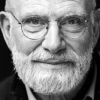
Oliver Sacks
Oliver Wolf Sacks, CBE, FRCPwas a British neurologist, naturalist and author who spent his professional life in the United States. He believed that the brain is the "most incredible thing in the universe" and therefore important to study. He became widely known for writing best-selling case histories about his patients' disorders, with some of his books adapted for stage and film...
NationalityBritish
ProfessionNon-Fiction Author
Date of Birth9 July 1933
communication thinking people
We speak not only to tell other people what we think, but to tell ourselves what we think. Speech is a part of thought.
passion men enthusiasm
I am a man of vehement disposition, with violent enthusiasms, and extreme immoderation in all my passions.
months
It is up to me now to choose how to live out the months that remain to me.
dream memories confused
And I often dream of chemistry at night, dreams that conflate the past and the present, the grid of the periodic table transformed to the grid of Manhattan. [...] Sometimes, too, I dream of the indecipherable language of tin (a confused memory, perhaps, of its plaintive "cry"). But my favorite dream is of going to the opera (I am Hafnium), sharing a box at the Met with the other heavy transition metals my old and valued friends Tantalum, Rhenium, Osmium, Iridium, Platinum, Gold, and Tungsten.
eye men self
If a man has lost a leg or an eye, he knows he has lost a leg or an eye; but if he has lost a self—himself—he cannot know it, because he is no longer there to know it.
lying expression feelings
Thus the feeling I sometimes have - which all of us who work closely with aphasiacs have - that one cannot lie to an aphasiac. He cannot grasp your words, and cannot be deceived by them; but what he grasps he grasps with infallible precision, namely the expression that goes with the words, the total, spontaneous, involuntary expressiveness which can never be simulated or faked, as words alone can, too easily.
eye principles language
Language, that most human invention, can enable what, in principle, should not be possible. It can allow all of us, even the congenitally blind, to see with another person’s eyes.
reading writing musical
In terms of brain development, musical performance is every bit as important educationally as reading or writing.
eye imagination brain
We see with the eyes, but we see with the brain as well. And seeing with the brain is often called imagination.
creating brain orchestra
The brain is more than an assemblage of autonomous modules, each crucial for a specific mental function. Every one of these functionally specialized areas must interact with dozens or hundreds of others, their total integration creating something like a vastly complicated orchestra with thousands of instruments, an orchestra that conducts itself, with an ever-changing score and repertoire.
medicine humanity way
Music is...a fundamental way of expressing our humanity - and it is often our best medicine.
ocean brain sitting
Much more of the brain is devoted to movement than to language. Language is only a little thing sitting on top of this huge ocean of movement.
gratitude feelings special
I cannot pretend I am without fear. But my predominant feeling is one of gratitude. I have loved and been loved; I have been given much and I have given something in return; I have read and traveled and thought and written. I have had an intercourse with the world, the special intercourse of writers and readers.
depression moving orange-juice
Music can lift us out of depression or move us to tears - it is a remedy, a tonic, orange juice for the ear. But for many of my neurological patients, music is even more - it can provide access, even when no medication can, to movement, to speech, to life. For them, music is not a luxury, but a necessity.