Oliver Sacks
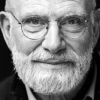
Oliver Sacks
Oliver Wolf Sacks, CBE, FRCPwas a British neurologist, naturalist and author who spent his professional life in the United States. He believed that the brain is the "most incredible thing in the universe" and therefore important to study. He became widely known for writing best-selling case histories about his patients' disorders, with some of his books adapted for stage and film...
NationalityBritish
ProfessionNon-Fiction Author
Date of Birth9 July 1933
memories imagination perception
Every act of perception, is to some degree an act of creation, and every act of memory is to some degree an act of imagination.
gratitude feelings wonder
My religion is nature. That’s what arouses those feelings of wonder and mysticism and gratitude in me.
our-world interesting perspective
People will make a life in their own terms, whether they are deaf or colorblind or autistic or whatever. And their world will be quite as rich and interesting and full as our world.
music fundamentals integrating
The power of music to integrate and cure. . . is quite fundamental. It is the profoundest nonchemical medication.
moving dancing musical
Music can move us to the heights or depths of emotion. It can persuade us to buy something, or remind us of our first date. It can lift us out of depression when nothing else can. It can get us dancing to its beat. But the power of music goes much, much further. Indeed, music occupies more areas of our brain than language does-humans are a musical species.
beautiful adventure thinking
Above all, I have been a sentient being, a thinking animal, on this beautiful planet, and that in itself has been an enormous privilege and adventure.
life anatomy-and-physiology disease
In examining disease, we gain wisdom about anatomy and physiology and biology. In examining the person with disease, we gain wisdom about life.
understanding mind needs
To live on a day-to-day basis is insufficient; we need to transcend, transport, escape; we need meaning, understanding, and explanation; we need to see over-all patterns in our lives. We need hope, the sense of a future; the freedom to get beyond ourselves...in states of mind that allow us to rise above our immediate surroundings and see the beauty and value of the world we live in.
fate unique people
There will be no one like us when we are gone, but then there is no one like anyone else, ever. When people die, they cannot be replaced. They leave holes that cannot be filled, for it is the fate - the genetic and neural fate - of every human being to be a unique individual, to find his own path, to live his own life, to die his own death.
real unique men
If we wish to know about a man, we ask 'what is his story--his real, inmost story?'--for each of us is a biography, a story. Each of us is a singular narrative, which is constructed, continually, unconsciously, by, through, and in us--through our perceptions, our feelings, our thoughts, our actions; and, not least, our discourse, our spoken narrations. Biologically, physiologically, we are not so different from each other; historically, as narratives--we are each of us unique.
mean community culture
I had never thought about what it might mean to be deaf, to be deprived of language, or to have a remarkable language (and community and culture) of one’s own. Up to this point, I had mostly thought and written about the problems of individuals–here I was to encounter an entire community.
fall night thinking
I think hallucinations need to be discussed. There are all sorts of hallucinations, and then many sorts which are okay, like the ones I think which most of us have in bed at night before we fall asleep, when we can see all sorts of patterns or faces and scenes.
art unique emotional
Music, uniquely among the arts, is both completely abstract and profoundly emotional. It has no power to represent anything particular or external, but it has a unique power to express inner states or feelings. Music can pierce the heart directly; it needs no mediation.
art certainly delight demented emotional experience informal painting paintings patients quite recognize respond responsive scarcely seen time visual words
Certainly it's not just a visual experience - it's an emotional one. In an informal way I have often seen quite demented patients recognize and respond vividly to paintings and delight in painting at a time when they are scarcely responsive to words and disoriented and out of it. I think that recognition of visual art can be very deep.