Petrarch
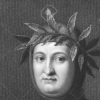
Petrarch
Francesco Petrarca, commonly anglicized as Petrarch, was an Italian scholar and poet in Renaissance Italy, and one of the earliest humanists. Petrarch's rediscovery of Cicero's letters is often credited for initiating the 14th-century Renaissance. Petrarch is often considered the founder of Humanism. In the 16th century, Pietro Bembo created the model for the modern Italian language based on Petrarch's works, as well as those of Giovanni Boccaccio, and, to a lesser extent, Dante Alighieri. Petrarch would be later endorsed as...
NationalityItalian
ProfessionPoet
Date of Birth20 July 1304
CityArezzo, Italy
CountryItaly
And men go about to wonder at the heights of the mountains, and the mighty waves of the sea, and the wide sweep of rivers, and the circuit of the ocean, and the revolution of the stars, but themselves they consider not.
Man has no greater enemy than himself. I have acted contrary to my sentiments and inclination; throughout our whole lives we do what we never intended, and what we proposed to do, we leave undone.
Death is a sleep that ends our dreaming. Oh, that we may be allowed to wake before death wakes us.
Books have led some to learning and others to madness.
Ruthless striving, overcomes everything.
It is better to will the good than to know the truth,
For virtue only finds eternal Fame.
All pleasure in the world is a passing dream.
Virtue is health, vice is sickness.
Gold, silver, jewels, purple garments, houses built of marble, groomed estates, pious paintings, caparisoned steeds, and other things of this kind offer a mutable and superficial pleasure; books give delight to the very marrow of one's bones. They speak to us, consult with us, and join with us in a living and intense intimacy.
Suspicion is the cancer of friendship.
If a hundred or a thousand people, all of the same age, of the same constitution and habits, were suddenly seized by the same illness, and one half of them were to place themselves under the care of doctors, such as they are in our time, whilst the other half entrusted themselves to Nature and to their own discretion, I have not the slightest doubt that there would be more cases of death amongst the former, and more cases of recovery among the latter.
Man has not a greater enemy than himself.
Five enemies of peace inhabit with us - avarice, ambition, envy, anger, and pride; if these were to be banished, we should infallibly enjoy perpetual peace.