Petrarch
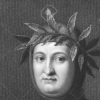
Petrarch
Francesco Petrarca, commonly anglicized as Petrarch, was an Italian scholar and poet in Renaissance Italy, and one of the earliest humanists. Petrarch's rediscovery of Cicero's letters is often credited for initiating the 14th-century Renaissance. Petrarch is often considered the founder of Humanism. In the 16th century, Pietro Bembo created the model for the modern Italian language based on Petrarch's works, as well as those of Giovanni Boccaccio, and, to a lesser extent, Dante Alighieri. Petrarch would be later endorsed as...
NationalityItalian
ProfessionPoet
Date of Birth20 July 1304
CityArezzo, Italy
CountryItaly
Love is the crowning grace of humanity, the holiest right of the soul, the golden link which binds us to duty and truth, the redeeming principle that chiefly reconciles the heart to life, and is prophetic of eternal good.
Love is the crowning grace of humanity.
The aged love what is practical while impetuous youth longs only for what is dazzling.
Books never pall on me. They discourse with us, they take counsel with us, and are united to us by a certain living chatty familiarity. And not only does each book inspire the sense that it belongs to its readers, but it also suggests the name of others, and one begets the desire of the other.
Sameness is the mother of disgust, variety the cure.
True, we love life, not because we are used to living, but because we are used to loving. There is always some madness in love, but there is also always some reason in madness.
Life in itself is short enough, but the physicians with their art, know to their amusement, how to make it still shorter.
I freeze and burn, love is bitter and sweet, my sighs are tempests and my tears are floods, I am in ecstasy and agony, I am possessed by memories of her and I am in exile from myself.
Nothing mortal is enduring, and there is nothing sweet which does not presently end in bitterness.
Alack our life, so beautiful to see, With how much ease life losest, in a day, What many years with pain and toil amassed!
Books come at my call and return when I desire them; they are never out of humor and they answer all my questions with readiness. Some present in review before me the events of past ages; others reveal to me the secrets of Nature. These teach me how to live, and those how to die; these dispel my melancholy by their mirth, and amuse me by their sallies of wit. Some there are who prepare my soul to suffer everything, to desire nothing, and to become thoroughly acquainted with itself. In a word, they open the door to all the arts and sciences.
My flowery and green age was passing away, and I feeling a chill in the fires had been wasting my heart, for I was drawing near the hillside above the grave.
I saw the tracks of angels in the earth: the beauty of heaven walking by itself on the world.
A good death does honour to a whole life.