Philip Zimbardo
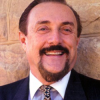
Philip Zimbardo
Philip George Zimbardois a psychologist and a professor emeritus at Stanford University. He became known for his 1971 Stanford prison experiment and has since authored various introductory psychology books, textbooks for college students, and other notable works, including The Lucifer Effect, The Time Paradox and The Time Cure. He is also the founder and president of the Heroic Imagination Project...
NationalityAmerican
ProfessionScientist
Date of Birth23 March 1933
CountryUnited States of America
Philip Zimbardo quotes about
When I look back on it, I think, "Why didn't you stop the cruelty earlier?" To stand back was contrary to my upbringing and nature. When I stood back as a noninterfering experimental scientist, I was, in a sense, as drawn into the power of the situation as any prisoners and guards.
The level of shyness has gone up dramatically in the last decade. I think shyness is an index of social pathology rather than a pathology of the individual.
Majority decisions tend to be made without engaging the systematic thought and critical thinking skills of the individuals in the group. Given the force of the group's normative power to shape the opinions of the followers who conform without thinking things through, they are often taken at face value. The persistent minority forces the others to process the relevant information more mindfully. Research shows that the deciscions of a group as a whole are more thoughtful and creative when there is minority dissent than when it is absent.
We like to think there is this core of human nature – that good people can't do bad things, and that good people will dominate over bad situations. Infact, when we look at the Stanford prison studies, that we put good people in an evil place, and we saw who won. Well, the sad message in this, is in this case is the evil place won over the good people.
We all like to think that the line between good and evil is impermeable--that people who do terrible things, such as commit murder, treason, or kidnapping, are on the evil side of this line, and the rest of us could never cross it. But the Stanford Prison Experiment and the Milgram studies revealed the permeability of that line. Some people are on the good side only because situations have never coerced or seduced them to cross over.
My first formal research, published in 1953, was on trying to understand the dynamics of prejudice, of interaction between blacks and Puerto Ricans.
Before I knew that a man could kill a man, because it happens all the time. Now I know that even the person with whom you've shared food, or whom you've slept, even he can kill you with no trouble. The closest neighbor can kill you with his teeth: that is what I have Learned since the genocide, and my eyes no longer gaze the same on the face of the world.
While no one can change events that occurred in the past, everyone can change attitudes and beliefs about them.
Time perspective is one of the most powerful influences on all of human behavior. We're trying to show how people become biased to being exclusively past-, present- or future-oriented.
There are no limits to what I would do to make my classes exciting, interesting, unpredictable.
In one sense, the Stanford prison study is more like a Greek drama than a traditional experiment, in that we have humanity, represented by a bunch of good people, pitted against an evil-producing situation. The question is, does the goodness of the people overwhelm the bad situation, or does the bad situation overwhelm the good people?
The [Stanford Prison Experiment] was readily approved by the Human Subjects Research committee because it seemed like college kids playing cops and robbers, it was an experiment that anyone could quit at any time and minimal safeguards were in place. You must distinguish hind sight from fore sight, knowing what you know now after the study is quite different from what most people imagined might happen before the study began.
I've always been curious about the psychology of the person behind the mask. When someone is anonymous, it opens the door to all kinds of antisocial behavior, as seen by the Ku Klux Klan.
Our sense of identity is in large measure conferred on us by others in the ways they treat or mistreat us, recognize or ignore us, praise us or punish us. Some people make us timid and shy; others elicit our sex appeal and dominance. In some groups we are made leaders, while in others we are reduced to being followers. We come to live up to or down to the expectations others have of us.