Samuel Johnson
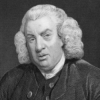
Samuel Johnson
Samuel Johnson, often referred to as Dr Johnson, was an English writer who made lasting contributions to English literature as a poet, essayist, moralist, literary critic, biographer, editor and lexicographer. Johnson was a devout Anglican and committed Tory, and has been described as "arguably the most distinguished man of letters in English history". He is also the subject of "the most famous single biographical work in the whole of literature," James Boswell's Life of Samuel Johnson...
NationalityEnglish
ProfessionNon-Fiction Author
Date of Birth18 September 1709
No man forgets his original trade: the rights of nations and of kings sink into questions of grammar, if grammarians discuss them
Nothing is to be expected from the workman whose tools are for ever to be sought
Small debts are like small gun shot; they are rattling around us on all sides and one can scarcely escape being wounded. Large debts are like canons, they produce a loud noise, but are of little danger.
Smoking. . . is a shocking thing, blowing smoke out of our mouths into other people's mouths, eyes and noses, and having the same thing done to us.
Around his tomb let Art and Genius weep / But hear his death, ye blockheads! hear and sleep.
The world is not yet exhaused; let me see something tomorrow which I never saw before.
The two great movers of the human mind are the desire for good, and the fear of evil
The use of traveling is to regulate imagination by reality, and instead of thinking how things may be, to see them as they are.
The chains of habit are generally too week to be felt, until they are too strong to be broken.
The chains of habit are generally too small to be felt until they are too strong to be broken.
The lustre of diamonds is invigorated by the interposition of darker bodies; the lights of a picture are created by the shades; the highest pleasure which nature has indulged to sensitive perception is that of rest after fatigue
Their learning is like bread in a besieged town: every man gets a little, but no man gets a full meal.
A Judge may be a farmer; but he is not to geld his own pigs. A Judge may play a little at cards for his own amusement; but he is not to play at marbles, or chuck farthing in the Piazza.
The folly of allowing ourselves to delay what we know cannot be finally escaped is one of the general weaknesses which, in spite of the instruction of moralists, and the remonstrance of reason, prevail to a greater or less degree in every mind